
Last updated November 15, 2026
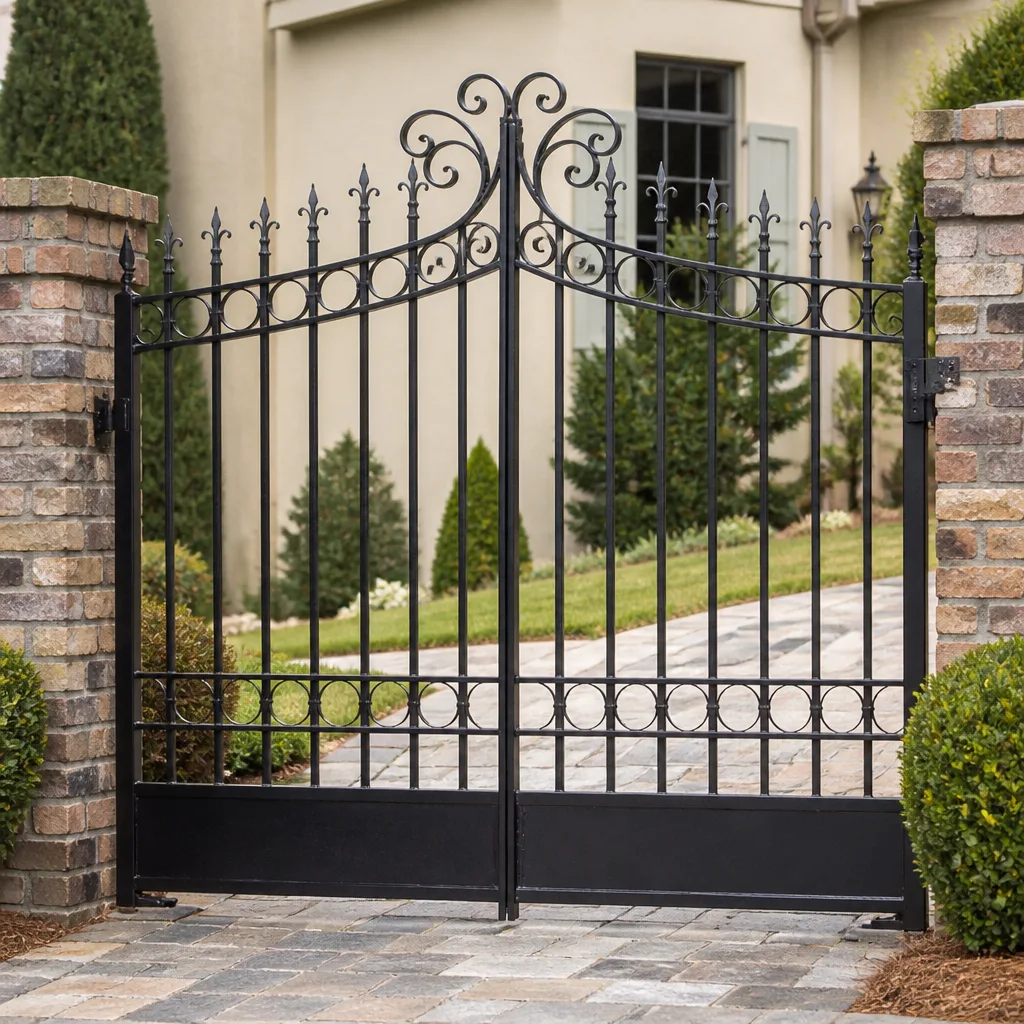 Wrought iron
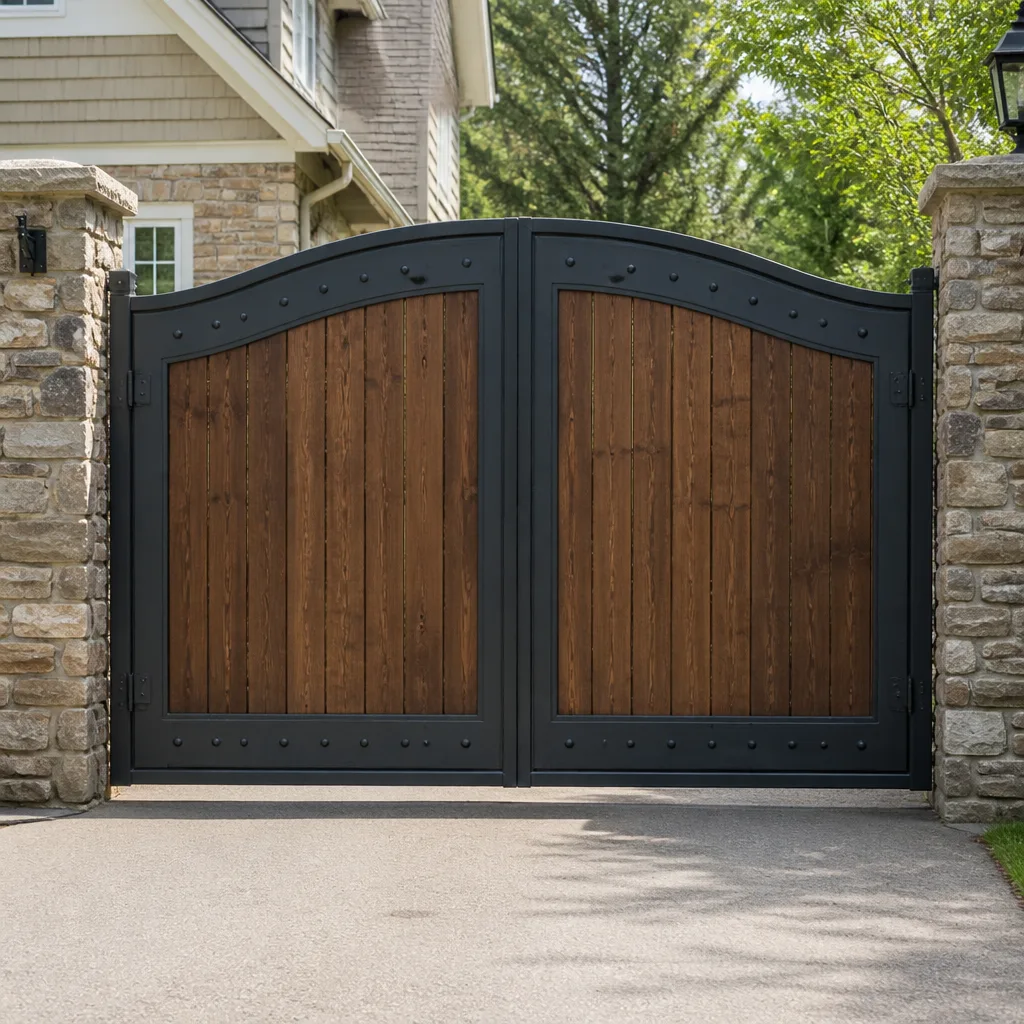 Wood & steel frame
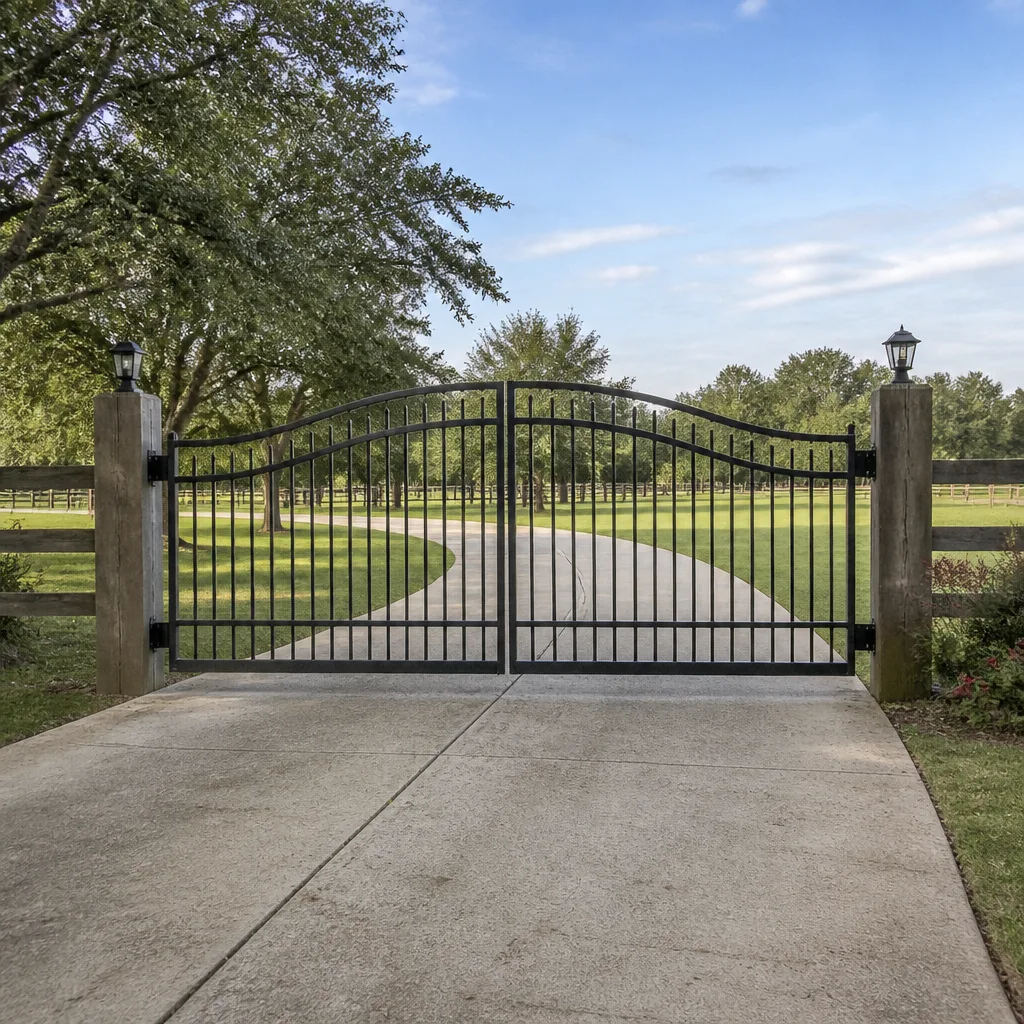 Farm & ranch
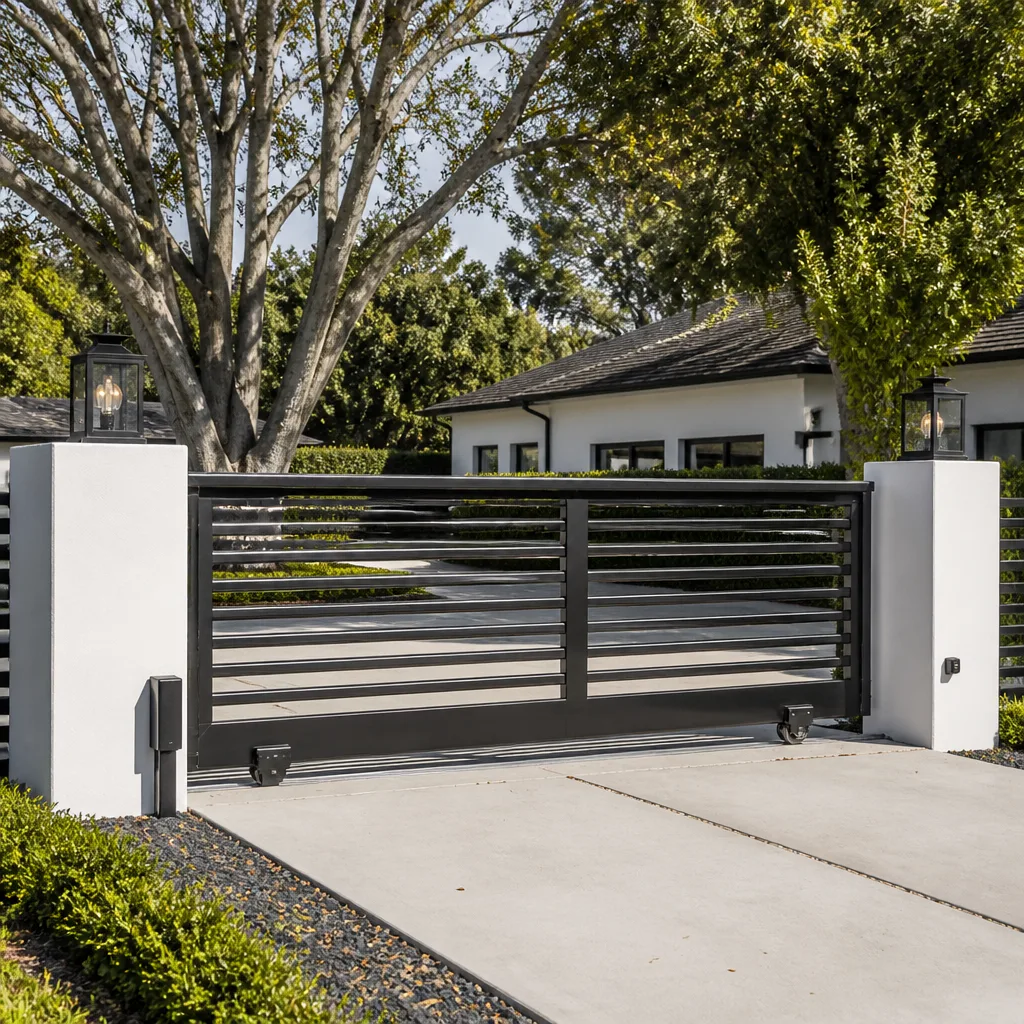 Sliding driveway gates
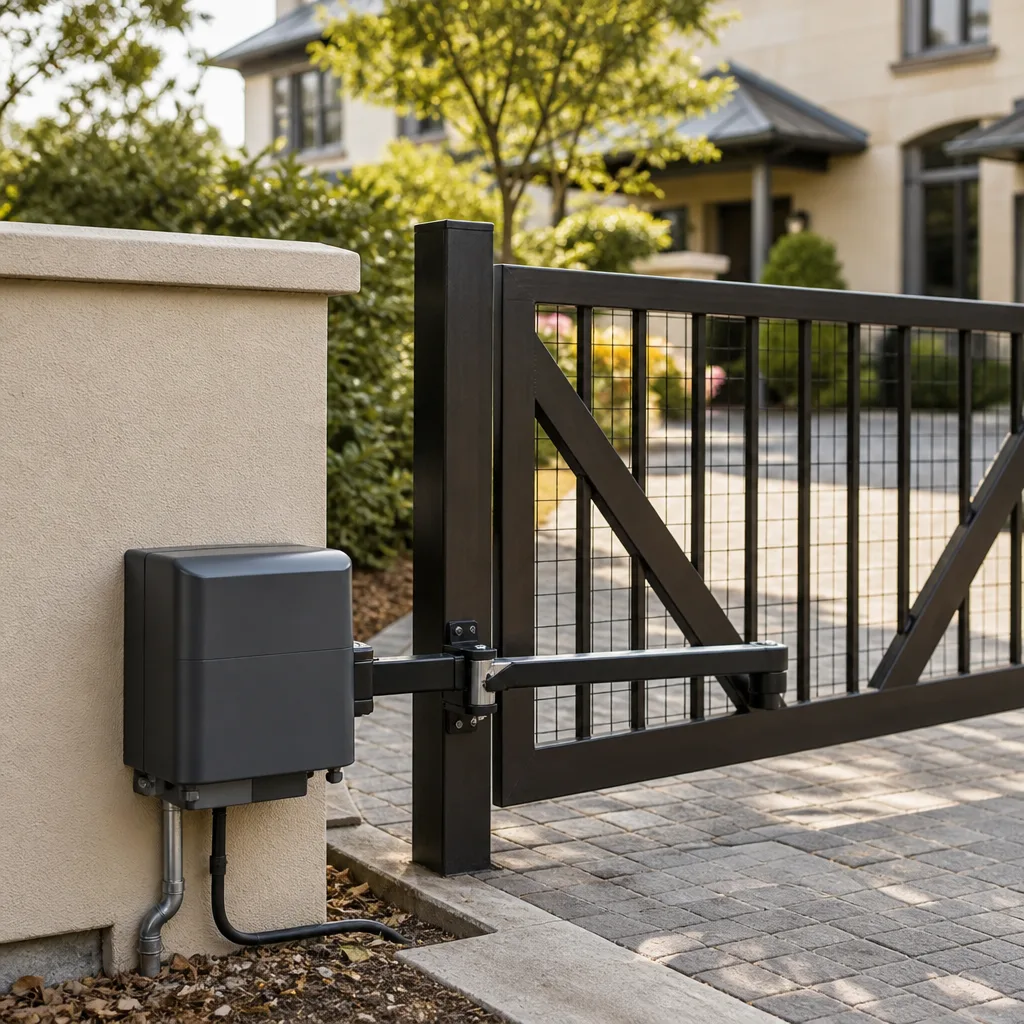 LiftMaster operators
Free on-site gate assessment - hinges, posts, and your LiftMaster or Nice gate operator checked before anything is quoted
The assessment is free and the quote is the invoice.
Get your free estimateGate Repair Emergency Preparedness Guide for Elizabeth Homes
Most gate emergencies are lost in the first twenty minutes, not at the moment the motor fails. A gate stuck in the open position at 11 PM is a security incident with a clock attached, and a gate stuck closed is a different problem entirely: an access emergency, not a security one. The mistake nearly every homeowner makes is treating both the same way when they don’t share a response sequence, a tool, or an urgency. This guide installs a mental playbook before the emergency happens, with the manual release walkthrough, the pre-emergency information sheet, and the scenarios where you should put the tools down and call. We cover Elizabeth specifically, because how a gate system behaves here is not how it behaves in a subdivision with forty feet of setback.
Quick Answer
A gate emergency in Elizabeth splits into two categories: stuck open (a security problem, secure the opening first, then diagnose) and stuck closed (an access problem, find the manual release before doing anything else). For any automated gate, the safe first move is the manual release, not the control board. When the release itself fails, or the gate is hanging off the track, stop and call (844) 654-1710. We answer 24/7. Fast dispatch from 7am to 7pm, Sunday through Friday.
Styles & brands we work with
- Wrought iron
- Wood & steel frame
- Farm & ranch
- Sliding driveway gates
- LiftMaster operators
Table of Contents
- The Two Emergency Categories: Stuck Open vs. Stuck Closed
- Sequence One: The Gate Is Stuck Open
- Sequence Two: The Gate Is Stuck Closed
- How to Use the Manual Release
- When the Manual Release Fails
- The Pre-Emergency Information Sheet
- Call Now or Wait Until Morning?
- What Elizabeth Conditions Do to Gates
- Common Mistakes to Avoid
The Two Emergency Categories: Stuck Open vs. Stuck Closed
Every gate failure falls into one of two buckets, and knowing which one you’re in sets the entire plan. When your gate is stuck open, the property is exposed, the security risk compounds with every passing hour, and the priority is shutting the opening, not repairing the gate. When the gate is stuck closed, the property is secure but the driveway is blocked, and the priority is getting the gate moving enough to get a vehicle out, not securing anything.
Stuck open: what’s actually at risk
- Access, not machinery. The motor already gave you the answer that it can’t close. Getting it to close tonight is a bonus, not the plan.
- A physical closure beats a technical one. A gate that opens is also a driveway that opens. Your first job is a physical barrier across that opening, not a control-board diagnosis in the dark.
- No manual release needed. The gate is already where the release would put it. You don’t release what’s already open.
Stuck closed: what’s actually at risk
- Access, not security. The property is doing its job. The vehicle isn’t.
- The manual release is your tool. Nearly every residential operator has a way to disconnect the gate from the motor so you can push it by hand.
- Time is not critical, but the release is. You can afford an hour to find the release and use it correctly. You cannot afford to force the gate with the motor still engaged.
Most people who call us in a panic at 11 PM are not in a repair emergency at all. They’re in a security or access emergency that happens to involve a gate. That doesn’t make it less urgent. It makes it easier to solve, because the fix is physical and the gate-specific repair is what happens next. Our team of gate specialists has worked on electric gate repair across Elizabeth long enough to know the difference, and we’ll tell you plainly which problem you actually have.
Sequence One: The Gate Is Stuck Open
A gate that’s stuck open is a security problem, not a gate problem. The first twenty minutes determine whether it stays a minor inconvenience or becomes something worse, and none of the first twenty minutes involve the motor. Follow this sequence in order and don’t skip ahead to diagnostics.
- Secure the opening first. Park a car across the gap if you have a second vehicle. A trash bin doesn’t stop anyone; a car does. If you don’t have a second vehicle, move whatever you have that’s heavy and visible into the gap and take a photo of the setup.
- Check for obstruction before anything else. Nine times out of ten, a gate won’t close because the safety system sees something in its path. Walk the full swing or slide path with a light. A leaf, a stick, a soccer ball, or a misaligned safety edge will hold a gate open indefinitely and looks exactly like a motor failure.
- Cycle the power once. Find the breaker or the operator’s disconnect switch if it has one, cut power for a full minute, and restore it. Do not press the same remote over and over; that’s a call for help the gate can’t answer and it drains the battery in the remote.
- Try a second control. If you have a keypad or wall button in addition to a remote, try each of them. If one opens the gate but not another, the problem is in the control, not the gate, and you now know it’s not a mechanical failure.
- Look at the operator’s diagnostic light. Most residential and light commercial operators show a fault code with a blinking LED on the control board or the motor housing. A single blink pattern repeated is the operator telling you what it sees. Write down the pattern.
- Leave it open and call if it’s dark. A gate standing open overnight is a security problem you’ve already partially solved with the car. Don’t spend the night on the control board. Call (844) 654-1710 and describe the fault pattern.
If the gate partially closed and then reversed on its own, that’s the safety system working as designed, not a fault. It means the operator believes something is in the path. Look harder at the path before you touch anything on the board. In Elizabeth, the most common obstruction we find on a stuck-open gate is a safety edge that was bumped out of alignment, not a dead motor. The gate was trying to close the whole time. It just didn’t trust the edge.
Sequence Two: The Gate Is Stuck Closed
A gate that’s stuck closed is an access problem. The property is secure, which is good, but your vehicle is trapped, which is the problem to solve. This sequence is different from the stuck-open one because the manual release is your primary tool and the control board comes later.
- Find the release before you touch anything. Every automated gate has a manual release, and every manual release is located on or near the operator. Don’t guess where it is in the dark. Locate it by feel and confirm it moves freely before you use it.
- Cut the power first, then release. If your operator has a dedicated disconnect switch, turn it off before you pull the release. A gate released from a motor that’s still trying to run can move unexpectedly.
- Open the gate by hand, slowly. A slide gate should roll on its track. A swing gate should pivot on its hinges. If either resists more than light hand pressure, stop. That resistance is a mechanical problem, not a release problem, and forcing it bends the track or the hinge.
- Block the gate open once you’ve moved it. A gate that’s released from its operator can drift. Chock it or prop it against a fixed surface before you do anything else.
- Note what you feel on the way. Track grinding, a hinge that binds, a gate that wants to lean, a wheel that’s flat spotted. Those observations are worth more to a technician than any description of the motor symptoms.
- Reconnect it only if you can do so safely. If the gate moved smoothly by hand, you may re-engage the release and try a normal cycle. If it didn’t, leave it released and open and call us.
The single most common trap in Elizabeth is trying to force a slide gate by hand while the operator is still engaged. That’s how gates come off the track, and a gate off the track is a different repair than a gate that simply wasn’t released. If you’re not sure whether the release fully engaged, don’t push. Call and describe what you’re feeling.
How to Use the Manual Release
The manual release is the single most underused and least understood part of any gate system. It’s also the one thing that lets you solve most access emergencies yourself in under five minutes. Here’s the general logic, and how it applies to the operators we see most often in Elizabeth.
The two release designs you’ll find
Nearly every residential operator uses one of two release types. A lever release is a handle or arm on the operator housing that you lift or turn to disengage the drive. A key release or keyed cylinder is a lock you open with a key, usually on the outside of the operator housing, to access the release or to release from the outside. Know which one you have, because in a stuck-closed emergency you may be standing at the gate with only what’s in your pocket.
General release procedure
- Turn off the operator’s power at the disconnect if it has one.
- Locate the release on or in the operator housing.
- Operate the release fully. Most releases have a full-travel position that a half-turn won’t reach.
- Listen for the motor to disengage audibly, then push the gate by hand three to six inches.
- If the gate moves freely, continue by hand to the position you need.
Brand-specific notes
Mighty Mule operators, common on residential swing gates, use a keyed release on many models, and the key lives with the house keys, not in the garage. LiftMaster and DoorKing operators on light commercial properties usually use a lever or mechanical release inside the operator housing, often behind an access panel that may be locked. If your operator is behind a locked housing, you need the cylinder key before you need anything else. Confirm which brand your operator is and keep its keys with you, not the property.
This is the detail most guides skip: a manual release you can’t reach, find, or unlock is not a release. The most common finding on a stuck-closed call is a homeowner with the release in plain sight and the wrong key on the ring. Know your brand and keep the key where you can reach it. If you don’t know your brand, our team handles Mighty Mule, DoorKing, LiftMaster, and the rest, and we’ll tell you what you’ve got. That’s what gate repair looks like done by someone who recognizes the system before touching it.
When the Manual Release Fails
The manual release failing is more common than most owners think, and it’s the scenario where a small problem becomes an expensive one if handled wrong. A release fails for predictable reasons: the mechanism seized from disuse, the keyed cylinder is frozen or galled, the release rod is bent, or the operator’s internal clutch is stuck. Each of these has a safe path and an unsafe one.
Do these
- Confirm the release isn’t partially disengaged. Move it through its full range twice; seized mechanisms often break free on the second attempt.
- Check whether the operator is trying to run at the same moment. A motor that’s still driven won’t release cleanly. Cut the power at the breaker if there’s no disconnect.
- Look for obvious debris in the release housing, especially in winter.
- Photograph the release mechanism before you touch it, so a technician later sees exactly what you saw.
Don’t do these
- Don’t force the release lever with a bar, a pry bar, or extended leverage. The release is designed for hand force; force beyond that bends the internal mechanism, and that turns a release into a teardown.
- Don’t drive the gate with a vehicle to open it. The motor is still connected and you’ll damage the gate, the operator, or both.
- Don’t cut, bend, or remove any component of a powered gate, including wiring, safety edges, or loops.
If the release won’t move by hand, the gate is not going to open tonight without a technician. That’s the point to call, not the point to escalate. A seized release often needs the operator opened, and opening a powered gate operator is dangerous: capacitors hold a charge with the power off, moving parts can release suddenly, and the control board is exposed to weather and to you. Leave the cover on. We answer 24/7 at (844) 654-1710, and a call outside dispatch hours is booked into the next opening, Sunday through Friday, 7am to 7pm.
The Pre-Emergency Information Sheet
The single best thing you can do for your gate is to write down five facts about it before anything breaks. Every minute in a gate emergency, the technician is either working with information or hunting for it. This is the information sheet we’d want to see, and it’s worth twenty minutes with a flashlight this week.
The five facts to record
- Gate brand and operator brand. They’re often different companies. Note both. If you can’t find a label, a photo of the operator housing is enough for us to identify the system.
- Operator model or a photo of the data plate. Most operators have a plate or sticker on the housing. A clear photo of that plate, stored on your phone, saves the first fifteen minutes of any service call.
- Control board location. It’s inside the operator housing on most residential units, but where exactly you’ll find it (and whether it’s behind a panel you can open) is the kind of thing you want to know before dark.
- Manual release type and key location. Lever or keyed, and exactly where the key lives. If it’s a keyed cylinder, tag the key.
- Service provider contact. The number of a gate-only specialist, not a general contractor. You want someone who can name your brand over the phone.
Two extras worth folding in
- A photograph of the entire gate from the driveway, showing its position at rest. It documents the track, hinges, and posts before anything moves.
- The gate’s normal cycle time, roughly, from closed to open. If your normal is fourteen seconds and it’s now taking twenty, you have a developing problem you can fix in daylight.
Store the sheet on your phone and pin a paper copy somewhere in the house, not in the garage. Gates fail in wind and rain, and the garage is where the paper gets wet. If you’d rather not do the detective work, a free estimate from our team includes a written record of the brand and model for your file. That’s one of the reasons we work on your brand specifically, not just on gates in general: a system we can identify by name takes a fraction of the diagnostic time of one we can’t.
Call Now or Wait Until Morning?
Not every gate emergency is a real emergency. Some are, and they share characteristics you can recognize. Here’s the honest split, and where we draw the line on a professional call-out versus a problem that can hold until daylight.
Call immediately
- The gate is stuck open and you have no way to secure the opening.
- The manual release has failed, is seized, or you can’t find it.
- The gate is off its track, leaning, hanging from a hinge, or swinging from one post.
- Any part of the operator is smoking, sparking, hot to the touch, or smells of burning. Treat this as an electrical emergency: cut power at the breaker and don’t touch it.
- Anyone has been hurt, or a vehicle has struck the gate.
- The gate has moved on its own, or has run through a full cycle without being commanded.
Safe to wait until morning
- The gate is stuck closed and you’ve successfully released it and moved it by hand. Secure it open and it’s a daylight job.
- The gate cycles but is noisy, slow, or inconsistent. Note the behavior and call for an appointment.
- The remote stopped working but the keypad works, or vice versa. It’s a control, not the gate.
- The gate reverses on its own when it should close, and you’ve confirmed there’s no obstruction. This is a safety system problem, not a security one, and the gate is doing its job.
The hard line: if the gate is open and you can’t close the opening, you’re in a security emergency. If the gate is closed and you can’t open it and you’ve released it manually, you’re in an access problem that can wait. Everything electrical follows the same rule: power off and call. No gate is worth touching live wiring for.
What Elizabeth Conditions Do to Gates
Elizabeth’s housing stock and its weather put particular strain on the gate systems we work on, and knowing what fails here helps you spot a developing problem before it becomes an emergency. This is not a coat-at-the-property-line issue. It’s the physical reality of the city.
- Older construction and tight setbacks. Elizabeth has a lot of properties with shallow setbacks, and a gate that opens into a tight driveway or a property line has to be set up precisely. When a track shifts a half-inch from ground movement or a post settles, the gate travels into the problem rather than past it. A slide gate that drags or a swing gate that catches on its arc is usually a settled post, not a failed operator.
- Freeze-thaw cycles. Elizabeth’s winters cycle through freeze and thaw repeatedly, and that cycle moves posts, heaves tracks, and works fasteners loose. The most common winter call pattern we see is a slide gate that suddenly grinds in January and was fine in November. That’s the track and the ground, not the drive.
- Summer heat and driveways. Plastic wheels soften, tracks expand and bow, and a gate on a slightly warped track binds at one point in its travel and not another. A gate that sticks in the same spot every day is telling you exactly where to look.
- Seasonal debris. Fallen branches, leaves, and windblown debris collect at the base of the track and in the operator’s path, and they’re the most common cause of a gate that won’t close completely. Clearing the track line is the least technical and highest-value maintenance there is.
- Commercial and light industrial traffic. Elizabeth’s mixed-use commercial areas put gates through far more cycles per week than a residential driveway ever will. Operators on those gates need their cycle counts and adjustments checked more frequently, and a keyed commercial operator needs its release keys managed. If you manage a property, keep the key and the service contact together.
Property managers and homeowners in Elizabeth with a gate system should be watching the same three things every season: track condition, post stability, and the sound the gate makes at its slowest point in travel. If the slow point is a spot on the track, it’s a mechanical issue. If the slow point is anywhere, it’s the operator. That distinction alone saves a lot of wasted diagnostics.
Common Mistakes to Avoid
- Trying to repair a stuck-open gate in the dark. The gate is already open. The work in front of you is securing the opening, not diagnosing the motor. Waiting until daylight for the diagnostic is not giving up on the problem; it’s solving the security problem first. We make the daylight call much faster with the fault pattern from the operator’s diagnostic light.
- Forcing the manual release. A seized release that gets pried free with a bar becomes a broken release and often a bent internal mechanism. Hand force, full travel, two attempts. Then stop and call. The release is designed for the forces of a human hand, and nothing else.
- Pushing a gate by hand without confirming the release. This is how slide gates come off the track, and it’s a warranty-invalidating mistake that turns a small release issue into a full realignment. Confirm the release has taken before you move the gate an inch.
- Resetting the breaker over and over. A breaker that trips when the operator runs is reporting a fault during travel, and resetting it repeatedly is a diagnostic session with a motor. Reset once, note whether the fault recurs, and call.
- Calling a general contractor for a gate that won’t close. The operator, the safety edges, the access control, and the track are a system, and a generalist is going to learn your brand on your time. A gate-only specialist recognizes the system and brings the right parts.
- Not knowing the release key or brand. A stuck-closed emergency at 6 AM is not the moment to discover the operator key is with a tenant, or that the operator is a DoorKing and the release is behind a panel. The pre-emergency sheet exists for exactly this morning.
- Ignoring a gate that’s getting slower. A gate that used to take twelve seconds and now takes eighteen is telling you about a worn drive, a misaligned track, or a failing capacitor. It’s a daylight appointment, and catching it early keeps it from becoming a stuck-open night. The same is true of a gate that’s noisy in one spot.
See the difference
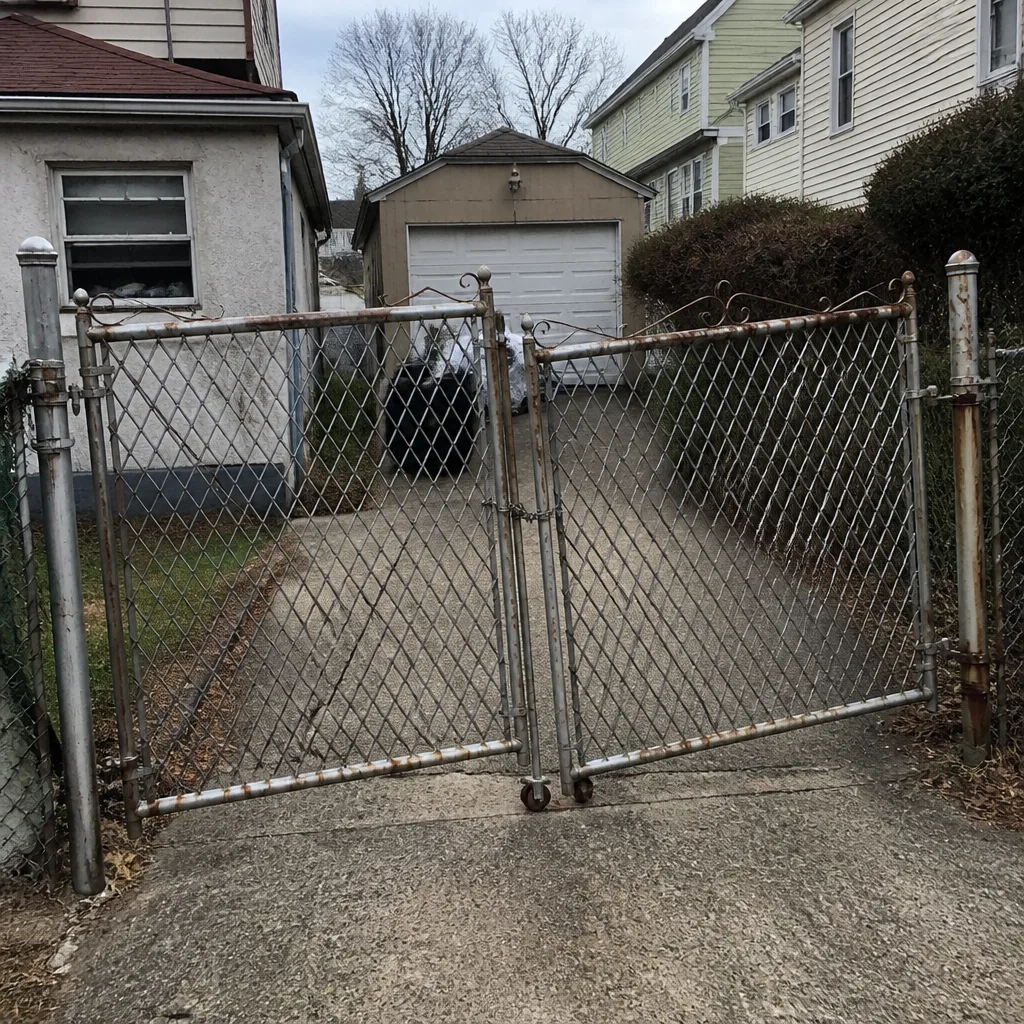 Before
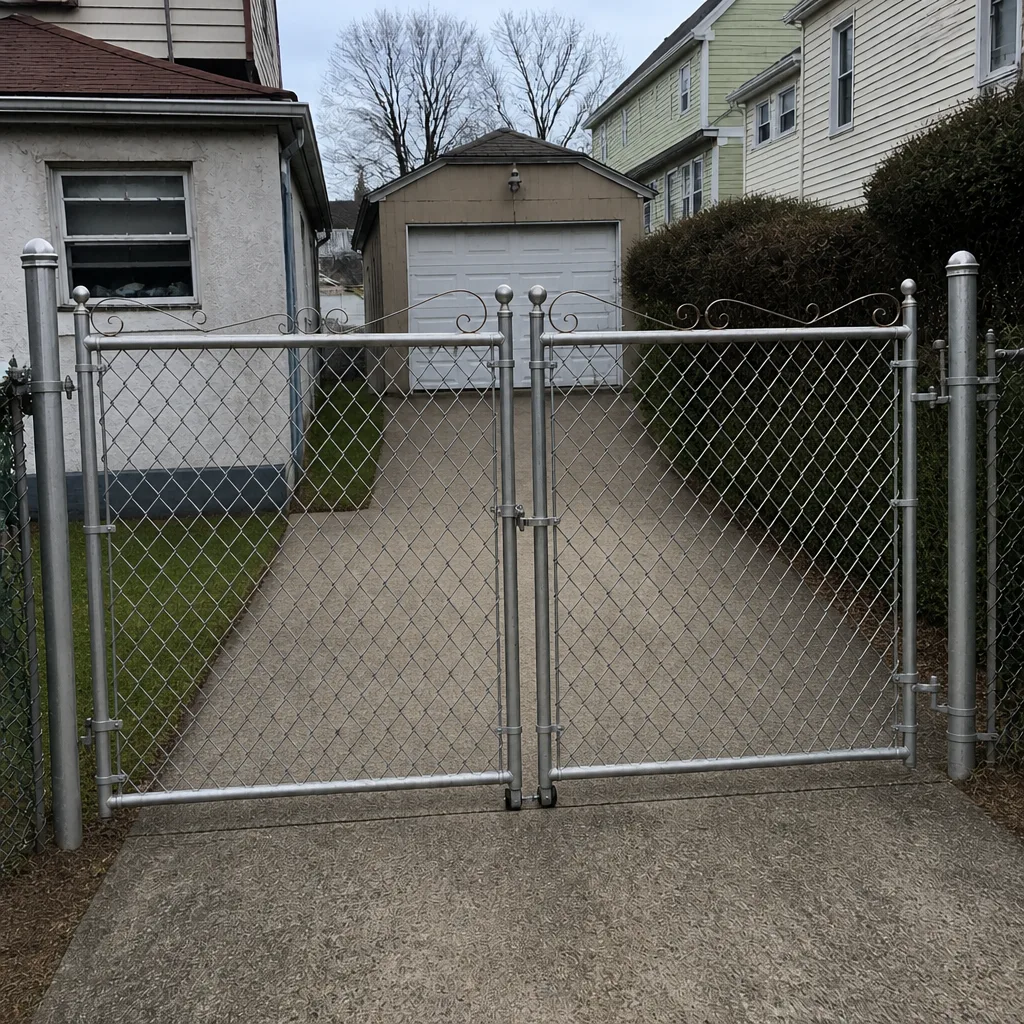 After
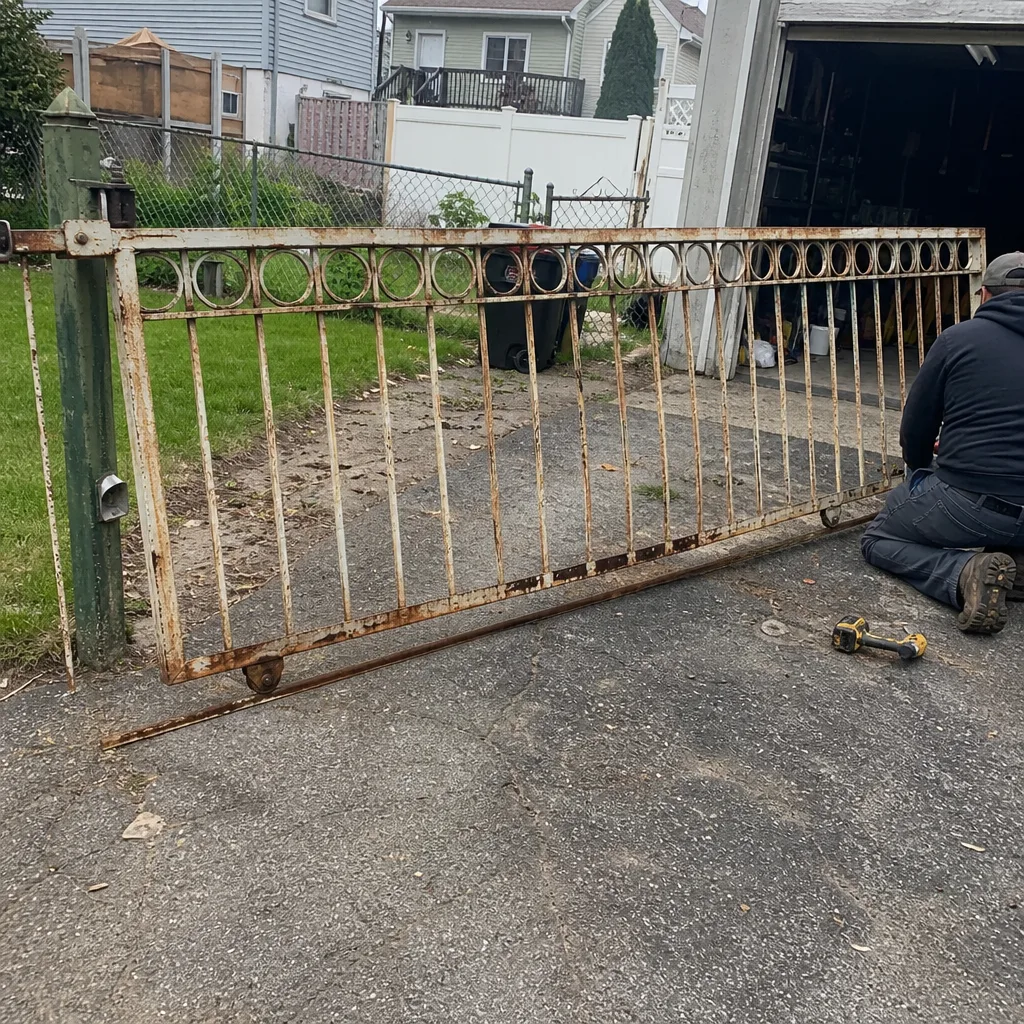 Before
 After
 Before
 After
When to Call a Professional
Some gate emergencies are yours to manage, and some are not. Here’s the short version, from a gate-only specialist’s perspective. Call a professional if: the manual release has failed, is seized, or you can’t reach it; the gate is off its track, sagging, or hanging from a hinge; any part of the operator is hot, smoking, or smells burned; the gate has moved on its own or cycled without a command; someone has been hurt or a vehicle has struck the gate; or the gate is stuck open with no way to secure the opening. Any of those is a call to (844) 654-1710, not a project to start in the dark. If you’ve successfully released a stuck-closed gate and secured it, that’s a daylight call, and a free estimate will tell you what’s actually wrong.
Gate Repair Elizabeth offers free estimates in Elizabeth, and our technicians have up to 14 years of experience across the residential and light commercial brands we work with. We answer 24/7. Fast dispatch from 7am to 7pm, Sunday through Friday.
Frequently Asked Questions
Secure the opening before you touch the gate. Park a vehicle across the gap or move a heavy, visible object into it, then check the gate’s travel path for debris and cut and restore power once. Don’t spend the night on the control board; call and describe the operator’s fault pattern instead. Call (844) 654-1710, and estimates are free.
The manual release is on or inside the operator housing, and it’s either a lever or a keyed cylinder, depending on the brand. Turn off the operator’s power first, operate the release through its full travel, then move the gate by hand three to six inches to confirm it’s disengaged. If the release won’t move by hand, stop and call – never force it.
Only after the manual release has fully disengaged the operator. Pushing a slide gate with the motor still engaged is the most common way gates come off their tracks, and it turns a release issue into a realignment repair. If you’re not certain the release has taken, don’t push. Call (844) 654-1710 for an exact diagnosis; estimates are free.
We answer the phone 24/7, and fast dispatch runs from 7am to 7pm, Sunday through Friday. A call outside dispatch hours is booked into the next opening. If you can release the gate manually and secure it, that’s the fastest path to getting your vehicle out tonight. Call (844) 654-1710 and we’ll set up the visit.
Have the gate brand and the operator brand, a photo of the operator’s data plate, the release key, and a description of what the gate did in the minutes before it failed. If the operator has a blinking diagnostic light, note the blink pattern. That single detail often tells us more than anything else on the call.
We handle both. Electric gate repair is a core part of what we do, not an add-on, and that includes the safety edges and the controls that keep a powered gate from closing on a vehicle or a person. If the gate is failing because the safety system is reading a fault, we’ll find it and correct it. Call (844) 654-1710; estimates are free.
The Bottom Line
A gate emergency is a security problem or an access problem, not a repair problem, until you’ve secured the opening or restored access. Stuck open means secure first and diagnose later. Stuck closed means find the release, confirm it’s fully disengaged, and move the gate by hand before you touch a control. The manual release is your most important tool, and the most common failure in an emergency is not being able to find, unlock, or use it. Fill out the pre-emergency sheet this week: brand, model, board location, release type, and a gate specialist’s number. That sheet turns a two-hour panic into a five-minute solution. When you do need help in Elizabeth, our team works on the major residential and light commercial brands by name, diagnoses by system rather than by guesswork, and gives you a written estimate before any work starts. Free estimates, upfront pricing, and a satisfaction guarantee.
For a gate that’s stuck right now, call (844) 654-1710. We answer 24/7. Fast dispatch from 7am to 7pm, Sunday through Friday. If your gate just needs a repair rather than an emergency response, start with Gate Repair Elizabeth, or browse our Elizabeth service page to see the full scope. Our team is here when your gate, your access control, or your security depends on it.
Written by the team at Gate Repair Elizabeth.