
Last updated November 15, 2026
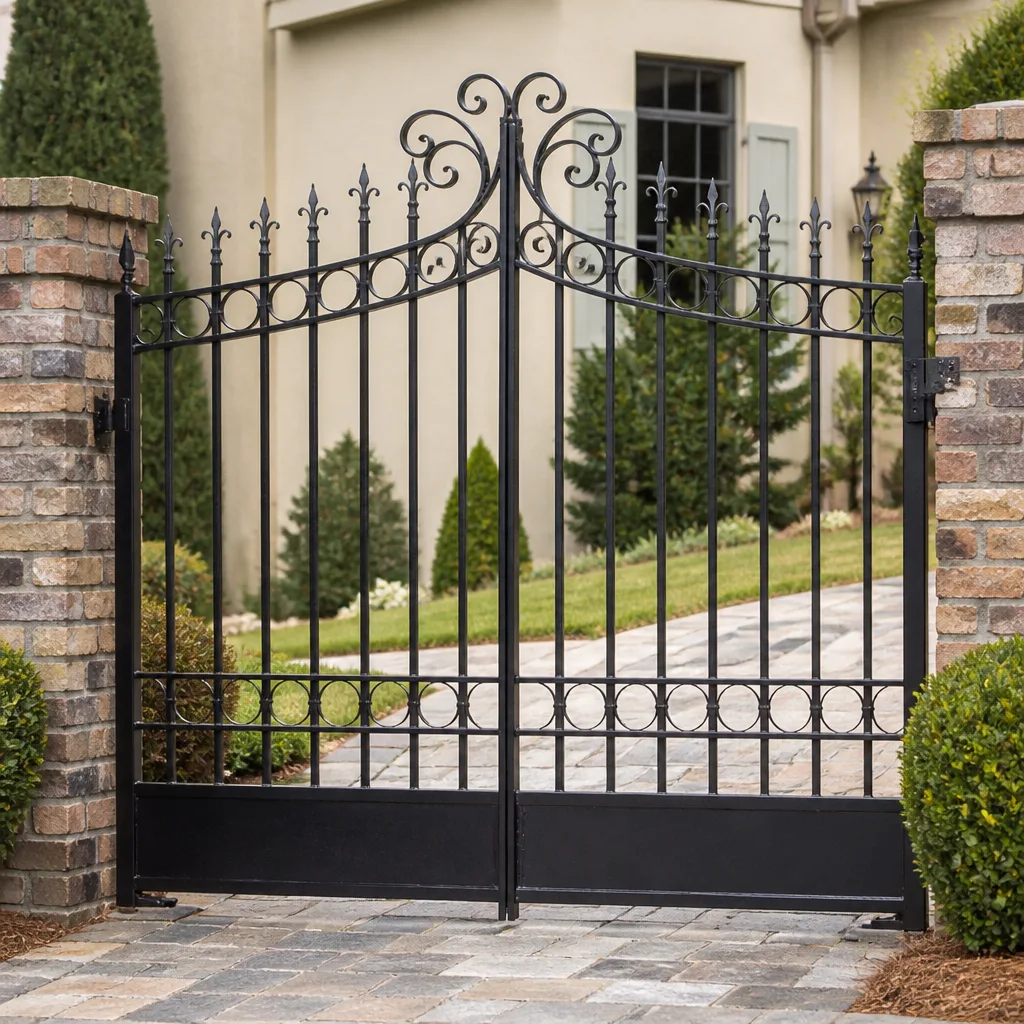 Wrought iron
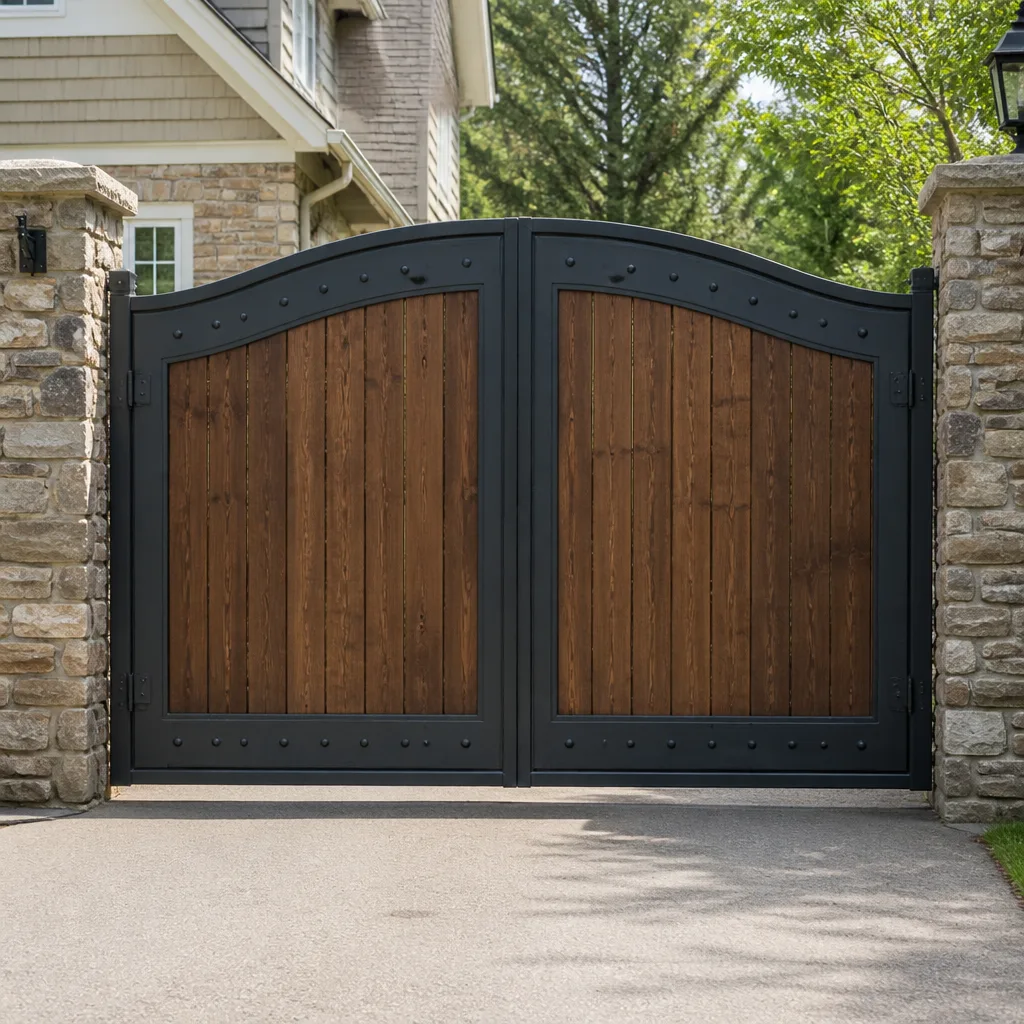 Wood & steel frame
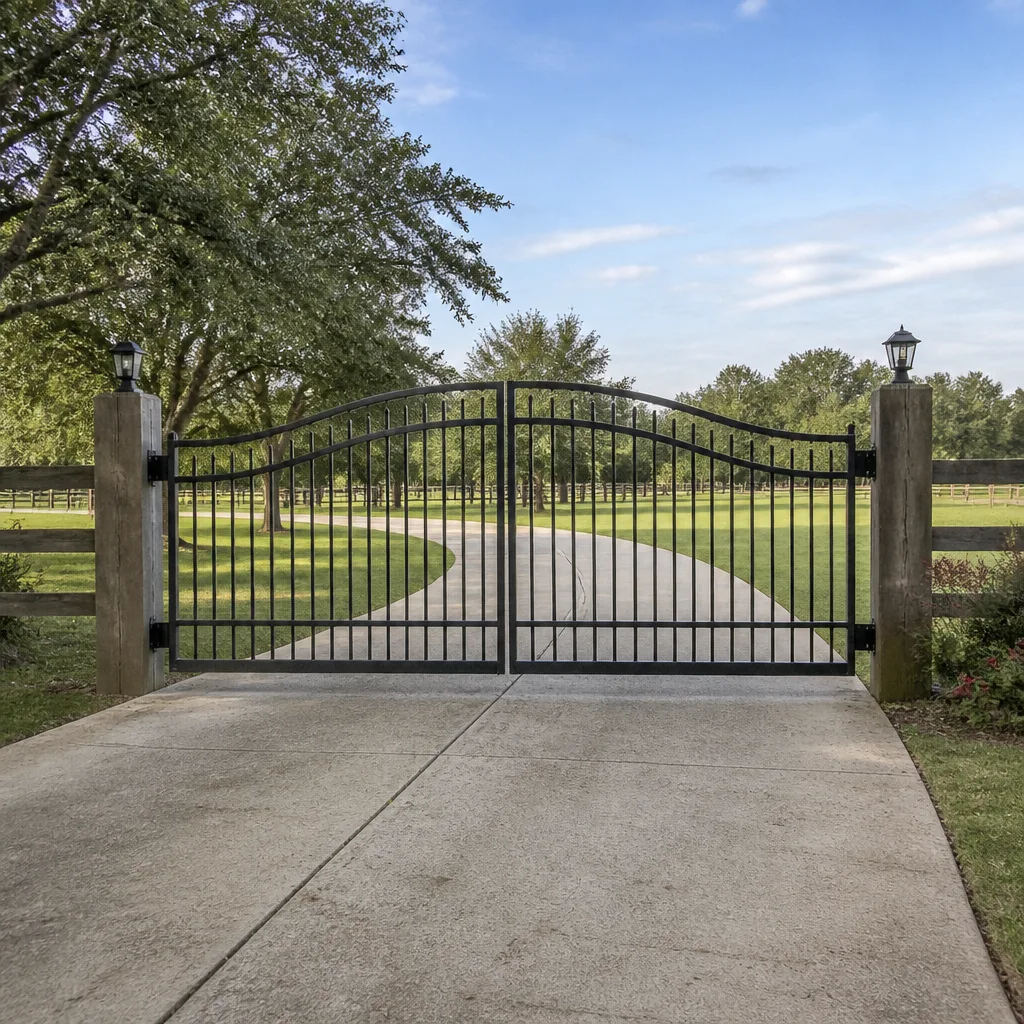 Farm & ranch
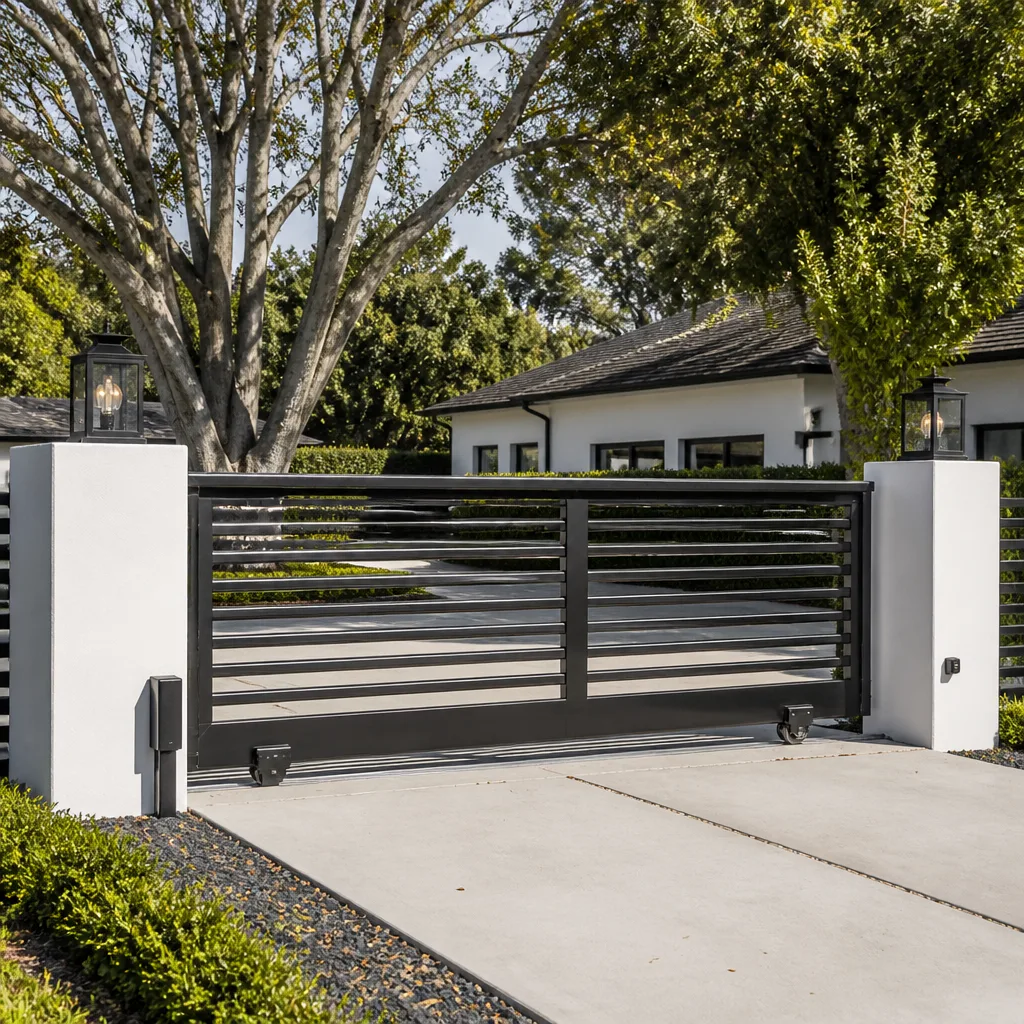 Sliding driveway gates
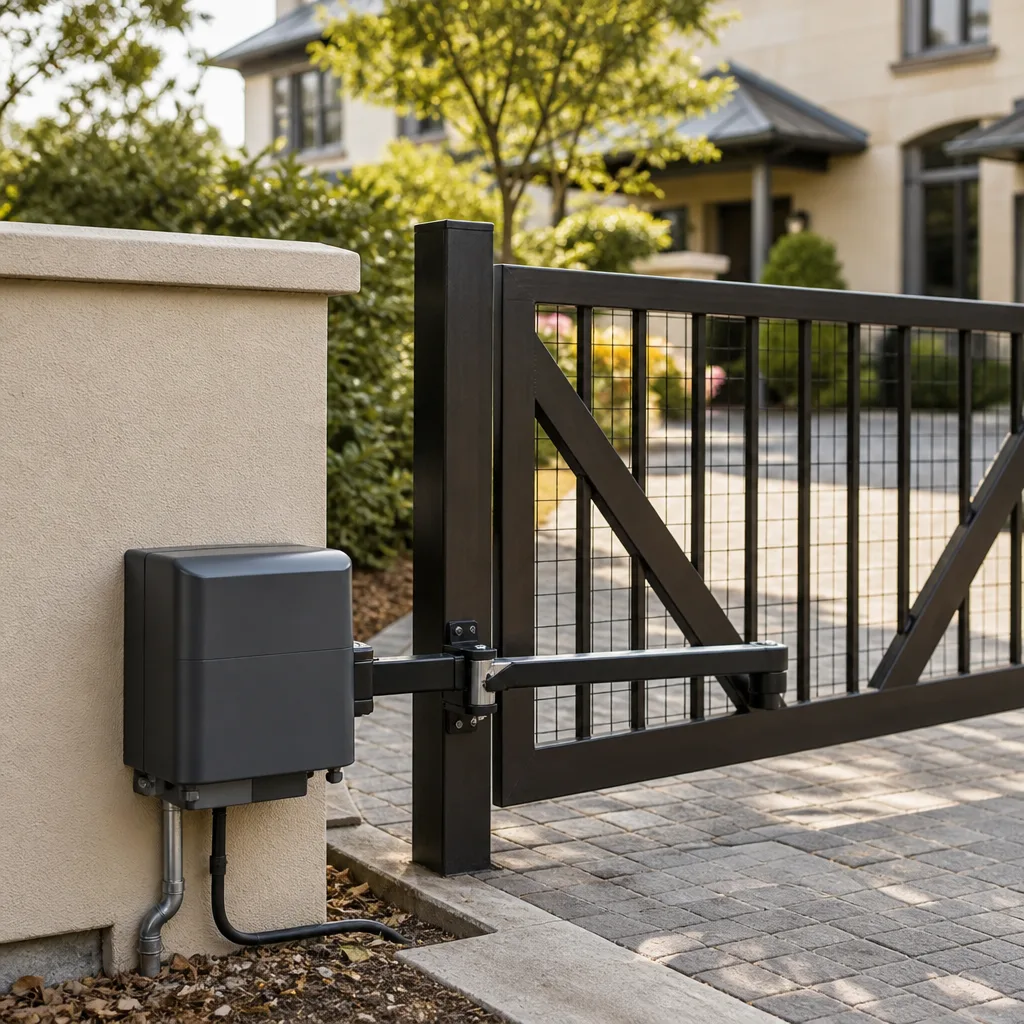 LiftMaster operators
Free on-site gate assessment - hinges, posts, and your LiftMaster or Nice gate operator checked before anything is quoted
The assessment is free and the quote is the invoice.
Get your free estimateThe Complete Guide to Gate Repair in Elizabeth
Most people assume a gate that stops working has one broken part. In our experience across Elizabeth, that’s rarely the case. A gate is a stack of interacting systems, and what looks like a dead motor often starts with a worn hinge, a misaligned track, or a control board that’s been quietly failing for weeks. Elizabeth’s mix of humid summers, winter freeze-thaw, and constant vibration from nearby transit corridors turns small faults into compound failures fast. This guide maps how the whole gate system works: the mechanical layer, the electrical layer, and the control layer. You’ll learn what actually gets repaired, which problems technicians misdiagnose most often, and when repair makes sense versus replacement.
Quick Answer
Gate repair in Elizabeth usually starts with a diagnosis of three interacting layers: the mechanical hardware (hinges, rollers, tracks, posts), the electrical system (operator, wiring, power supply, safety sensors), and the control layer (control board, remote programming, access hardware). Most failures come from the operator, the entryway surface, or the control board, not the gate panels themselves. A proper fix means correcting the full chain, not replacing one visible part and hoping the rest holds.
Styles & brands we work with
- Wrought iron
- Wood & steel frame
- Farm & ranch
- Sliding driveway gates
- LiftMaster operators
Table of Contents
- How a Gate System Actually Works: The Three Layers
- What Elizabeth’s Environment Does to Gate Hardware
- Residential Swings and Slides vs. Commercial Sliding Gates
- The Three Most Misdiagnosed Gate Problems
- A Step-by-Step Look at How We Diagnose a Gate
- Why Brand Specificity Matters in Gate Repair
- Repair vs. Replacement: How to Decide
- What Gate Repair Costs in Elizabeth
How a Gate System Actually Works: The Three Layers
A modern gate isn’t one machine. It’s three systems running on top of each other, and every fix has to respect that order. When you understand how they connect, you can make sense of why a gate that seems healthy one day refuses to open the next.
The mechanical layer
This is everything that physically moves and carries weight: gate panels, hinges, posts, rollers, tracks, and stops. It takes the load of every open and close cycle. When the mechanical layer drifts out of alignment, the operator has to work harder, which stresses the electrical layer.
The electrical layer
The operator, wiring, power supply, batteries, and safety edge or photo-eye sensors sit here. This layer converts electricity into motion and watches for obstructions. On automated systems it’s also where the most dangerous elements live: line voltage, wiring runs to the operator, and the safety devices that keep a moving gate from closing on a person, pet, or vehicle.
The control layer
The control board, limit switches, remote receivers, keypads, and access-control hardware all sit on top of the electrical layer. This is the “software and logic” of the gate. It decides when to open, when to close, how far to travel, and when to reverse. A control board with water damage or a stuck limit switch can make a perfectly healthy gate behave as if the motor has died.
The critical point: a fault in any layer can imitate a fault in any other. A slow gate can be a tired motor, a sagging hinge, or a limit switch stopping travel early. That’s why we always test all three layers before quoting a repair. If you’re trying to understand whether your system is purely mechanical or fully automated, our gate repair team walks through the diagnosis with you in plain terms.
What Elizabeth’s Environment Does to Gate Hardware
Gate hardware fails in predictable ways given the climate and setting it lives in, and Elizabeth produces its own pattern. Humidity in summer and repeated freeze-thaw cycles in winter work on metal, wood, and electronics differently, and the effect compounds year over year.
- Urban humidity speeds corrosion on hinges, rollers, and the operator housing. Painted panels hold up; the fasteners and pivot points underneath often don’t. Water collects where metal meets metal, and that’s where the wear begins.
- Freeze-thaw cycles work on posts and footings. A footing that shifts slightly across winter can leave a gate hanging unevenly by spring. On sliding gates, that same shift throws the track out of level, which forces the operator to fight resistance it was never designed for.
- Transit-corridor vibration is easy to overlook. Elizabeth’s streets carry constant heavy traffic, and that ground vibration loosens anchors, fasteners, and limit switches over time. A gate that opened smoothly for months can suddenly short-stop because a single anchor has backed off a few turns.
- Older entryway surfaces matter more than most homeowners expect. Uneven asphalt and settling walkways tilt the gate’s travel path. The gate itself may be fine, but the surface under it has changed the geometry.
- Overhanging trees and debris in urban yards clog tracks and obstruct photo-eyes. A single wet leaf over a sensor can hold a gate open or stop it mid-travel.
If your gate starts behaving differently after a season change, suspect environment before suspecting the motor. The Elizabeth climate rewards routine checks on fasteners, pivots, and sensor alignment far more than most people realize.
Residential Swings and Slides vs. Commercial Sliding Gates
Residential swing gates and commercial sliding gates share components, but the repair logic for each is genuinely different. Bringing the right mindset to the right gate is half the job.
Residential swing gates
Swing gates pivot at the post and rely heavily on hinge condition. A residential swing gate that sags or drifts usually has a hinge problem, a post problem, or both. Because the swing path covers open driveway space, safety feature placement has to be checked carefully. Most residential swing repairs focus on the pivot hardware, the operator arm, and the control-layer adjustments that keep the gate traveling the right arc.
Residential sliding gates
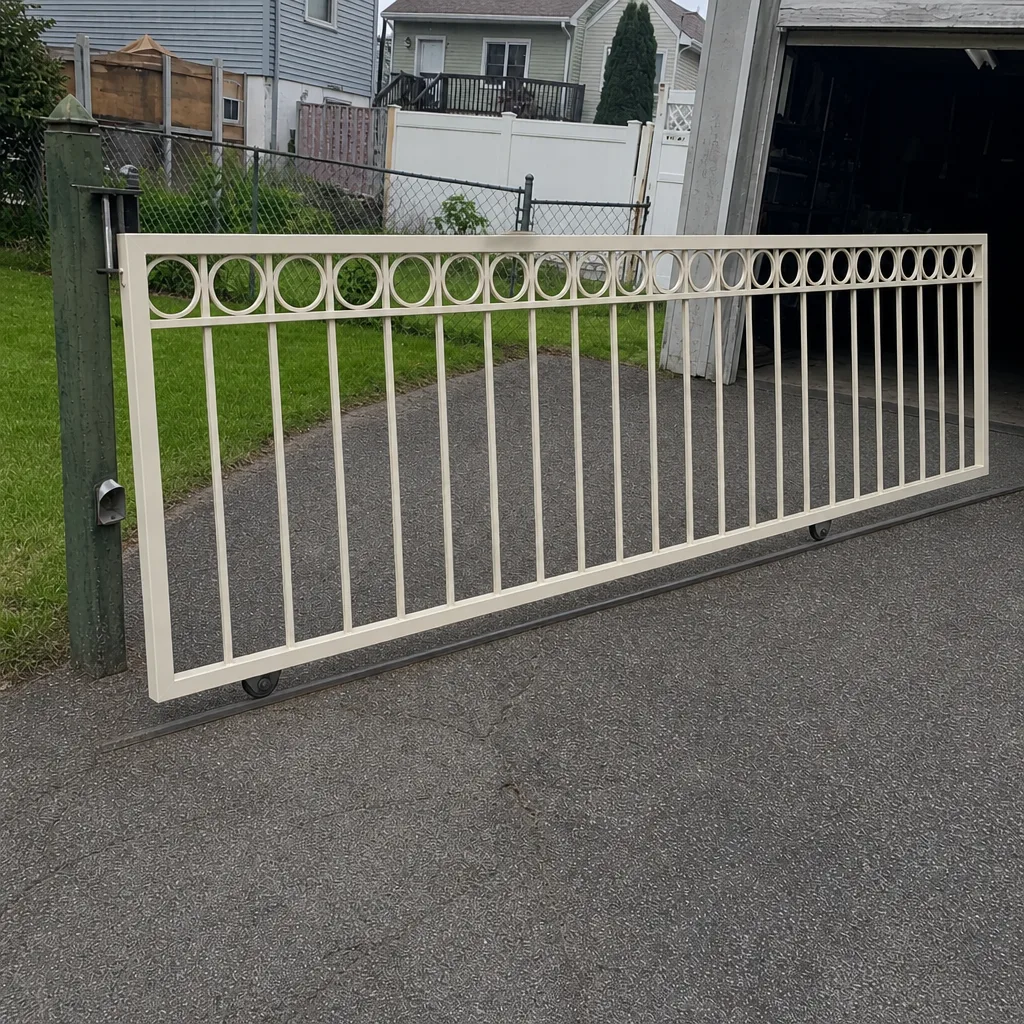
Residential slide gates run along a track or cantilever off a set of rollers. Repair logic here centers on track level, roller condition, and the travel limits that tell the operator when to stop. When a residential slide gate sticks, the cause is usually in the track or the rollers, not the motor itself. Water pooling near the track in wet seasons only accelerates the problem.
Commercial sliding gates
Commercial slide gates carry far more weight, run longer travel distances, and often integrate with access-control hardware. Repair logic changes here in an important way. Every fix must be tested against the gate’s duty cycle and the access system’s behavior, and the safety devices must be verified under load. On commercial systems, especially DoorKing and LiftMaster setups, the control board and access hardware often have to be checked together.
If you manage a commercial property and you don’t yet know the brand or model on your operator, that’s the first thing to sort out. Our electric gate repair work covers both residential and light commercial systems, and we start every job by identifying the equipment before touching anything.
The Three Most Misdiagnosed Gate Problems
We’ve seen the same three misdiagnoses repeated across Elizabeth. Each one leads to a part replaced that didn’t need to be, and the real fault stays in place.
1. “The motor is dead” that’s actually a control board or limit switch fault
A gate that won’t move at all often has a healthy motor. What’s failed is the control board, a limit switch stuck mid-travel, or a safety device holding the gate in a fault state. Replacing the motor when the control board is the culprit adds cost and doesn’t fix the gate. On systems like Mighty Mule and Elite, we always test the control layer before pricing an operator.
2. “The gate is binding” that’s actually a footing or track issue
When a slide gate drags or a swing gate scrapes, the instinct is to blame the rollers or hinges. Often the geometry has shifted: a footing has settled, or a track has gone out of level. New rollers on a shifted track just fail faster. The correct fix starts with the surface and the mounting points underneath.
3. “The remote is broken” that’s actually a receiver or safety-loop problem
Remotes get replaced constantly for a problem that lives in the receiver losing power, a photo-eye knocked out of alignment, or an access-control issue on commercial hardware. Programming a new remote onto a system with a bad photo-eye just gives you two remotes that don’t work.
Each of these traced back to the three failure points we flagged up front: the operator, the entryway surface, and the control board. Diagnostic order matters more than parts.
A Step-by-Step Look at How We Diagnose a Gate
Diagnosis is the whole job on a gate. Once you know what’s actually failing, the repair is usually straightforward. Here’s the sequence we follow on a typical call in Elizabeth.
- Identify the equipment. We record the operator brand and model, the gate type (swing or slide), and any access-control hardware. Brand specificity is what lets us go straight to the right parts and programming.
- Test the mechanical layer. With the operator disengaged, we move the gate by hand. Any drag, sag, or stiffness points to hinges, rollers, track, or post condition.
- Check the entryway surface. We look at the track, footing, and concrete under the gate for settling or tilt that would throw the travel path out.
- Test the electrical layer. We verify power at the operator, check the battery on battery-backup units, and confirm wiring connections are sound.
- Test the safety devices. Photo-eyes and safety edges are checked for alignment and response. This step is not optional on any automated gate.
- Test the control layer. Limit switches, control board, and remote receivers are exercised to confirm the gate stops and reverses where it should.
- Write up the diagnosis and quote. We tell you which layer failed, what it takes to correct it, and what the estimate is before any work begins. The price you agree to is the price on the invoice.
The full sequence usually takes less than an hour. Skipping any step is how gates end up with repeat service calls.
Why Brand Specificity Matters in Gate Repair
Gate operators are not interchangeable, even when they look similar. Each brand has its own control logic, its own programming sequence, its own failure points, and its own compatible parts. A technician who “figures it out on the job” pays for that time in your driveway.
We’re experienced with nine of the major gate brands in residential and commercial use: LiftMaster, FAAC, BFT, Linear, Viking, Ghost Controls, DoorKing, Elite, and Mighty Mule. That matters in real terms:
- The right parts arrive the first time, so you’re not waiting on a second trip.
- Programming is done correctly, so limits and safety behavior are set to spec.
- Adjustments are made with the brand’s own tolerances in mind, which reduces callbacks.
- The diagnosis is faster because we know where each brand tends to fail.
A LiftMaster residential operator, a DoorKing commercial access system, and a Mighty Mule DIY-grade unit need three different approaches. When we start a job, the first question we answer is “which system is this?” because everything downstream depends on it.
Repair vs. Replacement: How to Decide
Most gate repairs extend the life of the system substantially. The decision to replace is about cumulative damage, not about a single failure.
Repair usually makes sense when:
- A single component has failed on an otherwise solid system.
- The gate panels themselves are structurally intact.
- The operator is healthy and the fault is in the control layer.
- A footing or track can be corrected without a full rebuild.
Replacement usually makes more sense when:
- Multiple operators have failed in a short window, which often points to a wiring, power, or site problem that keeps damaging replacements.
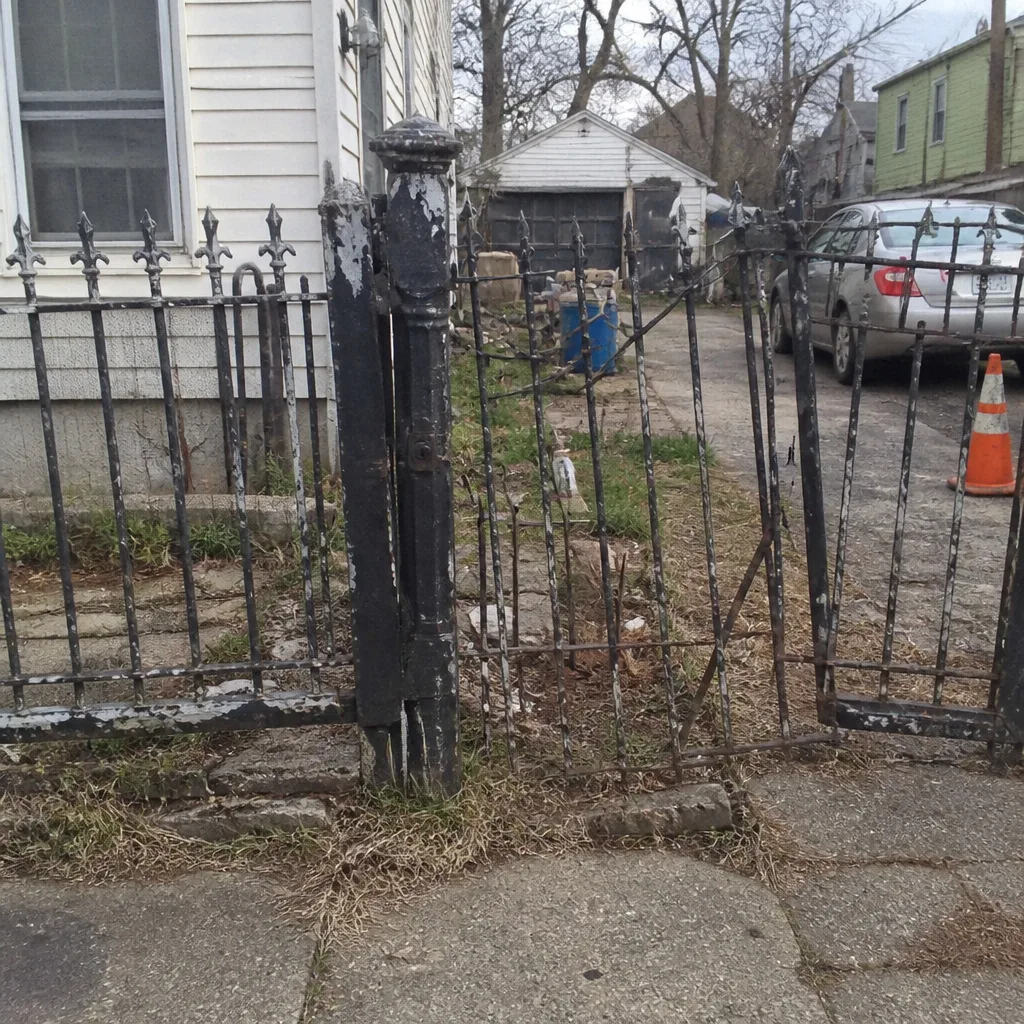
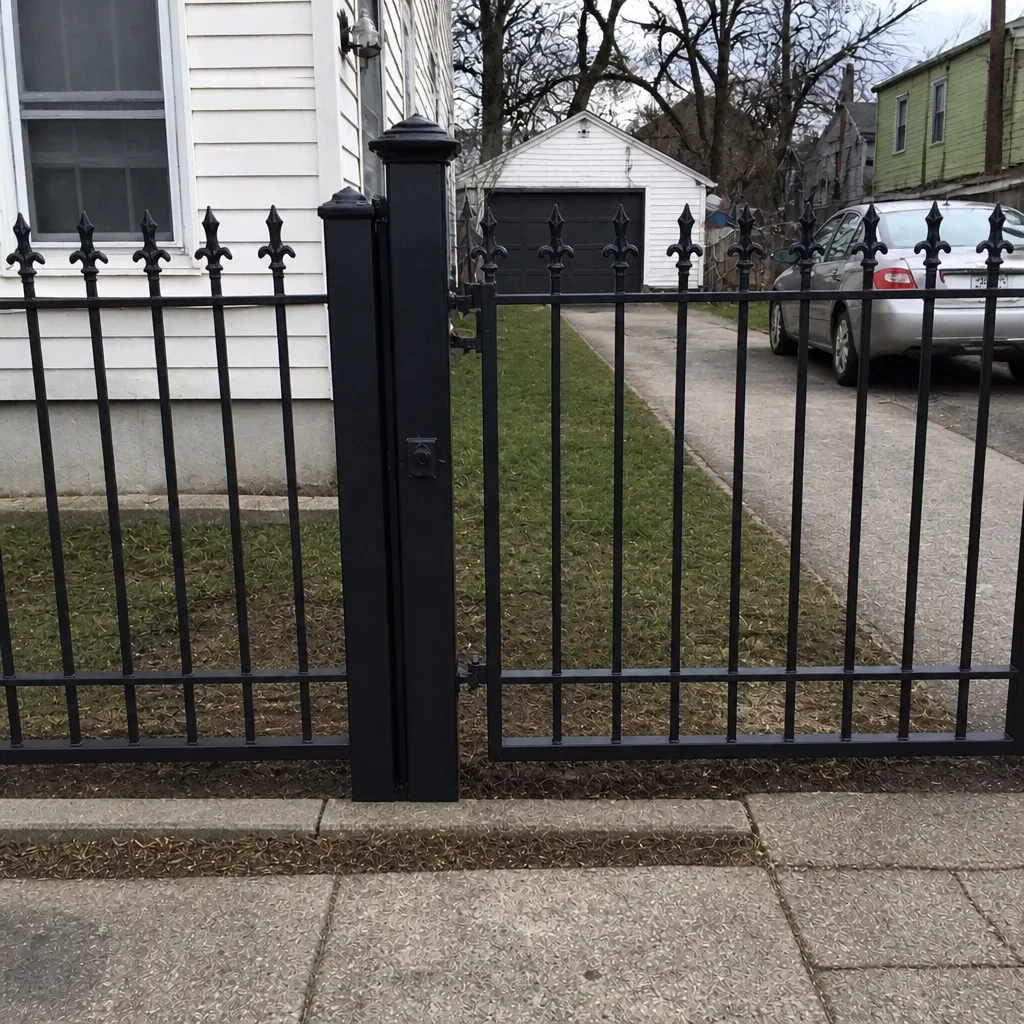
- The gate panels have structural corrosion or deformation that no longer holds alignment.
- A commercial gate’s duty cycle has been exceeded for years and repair costs are stacking up.
- Access-control needs have changed enough that the existing hardware can’t support them.
The honest answer depends on the state of all three layers, not just the visible fault. If you’re weighing repair against a new gate, our Gate Repair Elizabeth team will lay out both paths and let you choose.
What Gate Repair Costs in Elizabeth
Gate repair pricing depends on which layer failed and how much of the surrounding structure has to be corrected. There’s no single flat rate, and any quote given before a diagnosis is a guess. What we can say with confidence is that the estimate is free, the price is quoted before work starts, and the written estimate sets the final price.
A quote typically reflects:
- The layer or layers that failed (mechanical, electrical, or control).
- Whether the entryway surface needs correction before the gate repair.
- The brand and model of the operator, which affects parts availability.
- Whether access-control hardware has to be reprogrammed or replaced.
- Any safety devices that need alignment or replacement to restore normal operation.
We don’t quote over the phone for gate work because the failure points aren’t visible until we’re standing at the gate. We do give you a written estimate on-site before any work starts, and we don’t vary the price after you’ve agreed. Call (844) 654-1710 to book a free estimate. We answer 24/7, with fast dispatch from 7am to 7pm, Sunday through Friday.
Common Mistakes to Avoid
- Replacing the motor first. On most failed gates, the motor is fine and the control board or a limit switch is the actual fault. Test the control layer before buying an operator.
- Installing new rollers on a bad track. If the track or footing has drifted, new rollers just fail faster. Correct the surface before installing parts.
- Ignoring sensor alignment after a storm. Elizabeth wind and rain knock photo-eyes out of alignment regularly. A gate stuck open after weather is usually a sensor issue, not a control board failure.
- Reprogramming remotes when the receiver is the problem. If a new remote doesn’t work, the issue is upstream. Check the receiver and the photo-eyes before buying more remotes.
- Skipping fastener checks after a hard winter. Freeze-thaw cycles loosen anchors and hinges. A few minutes checking torque in spring prevents the sag that becomes an operator problem by summer.
- Treating a commercial gate like a residential one. Duty cycle and access-control integration change the repair logic. A residential-style fix on a commercial DoorKing system produces repeat calls.
- Putting off a binding gate for a “next month” visit. Mechanical drags wear the operator every time the gate moves. What’s a hinge adjustment now becomes a motor replacement later.
See the difference
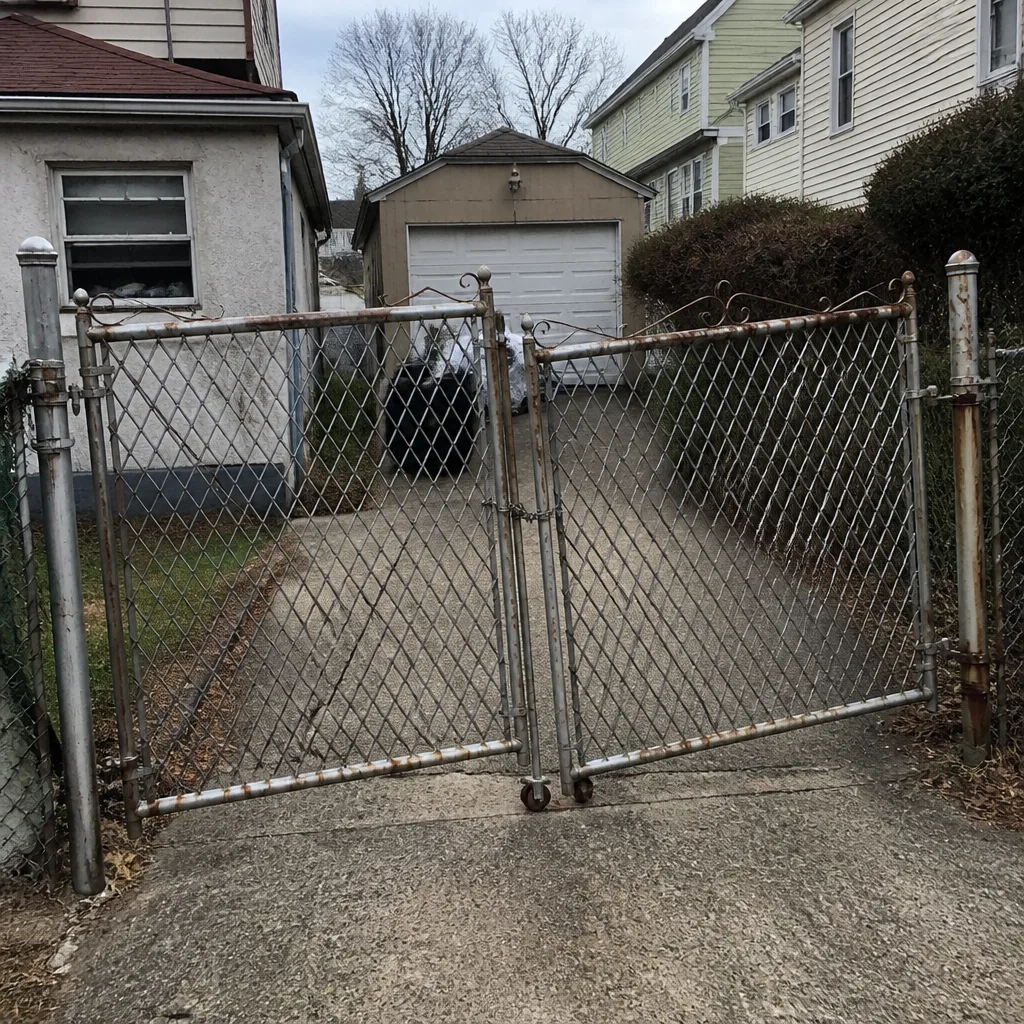 Before
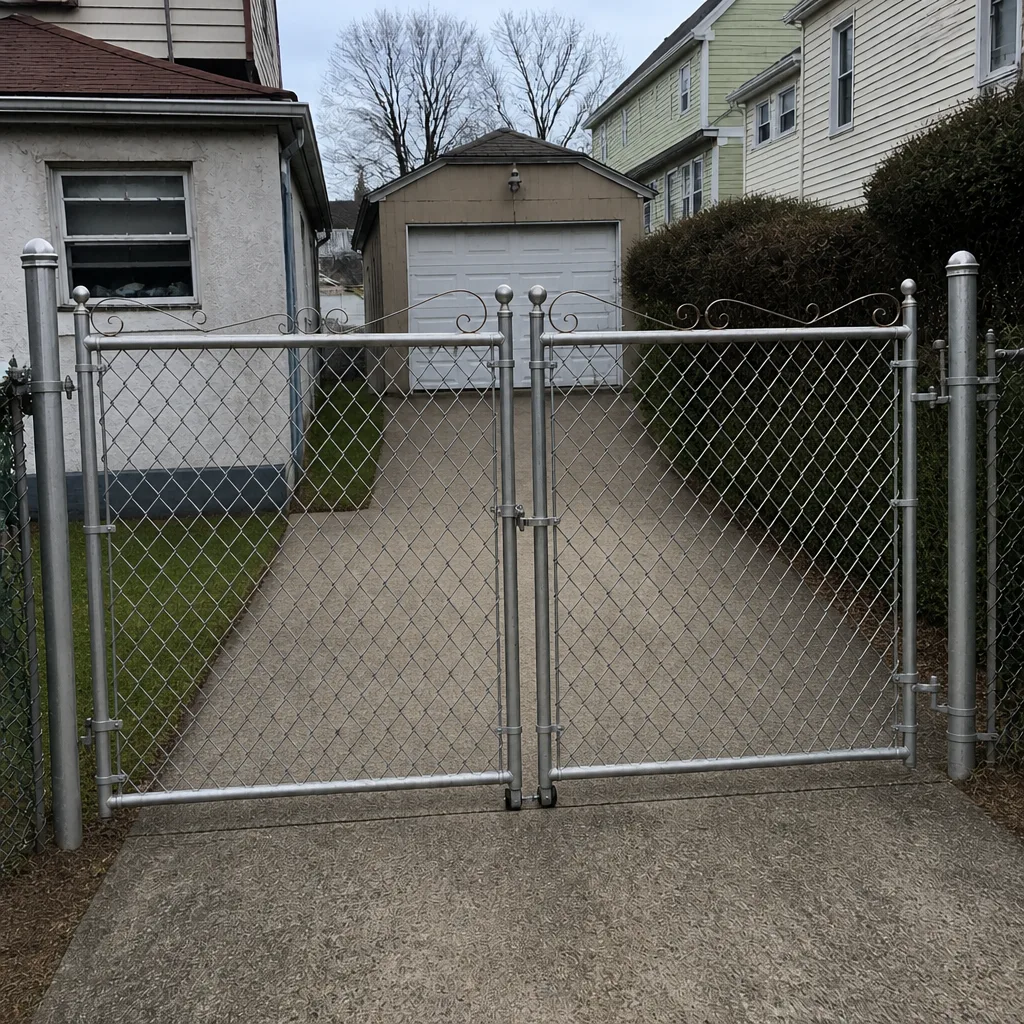 After
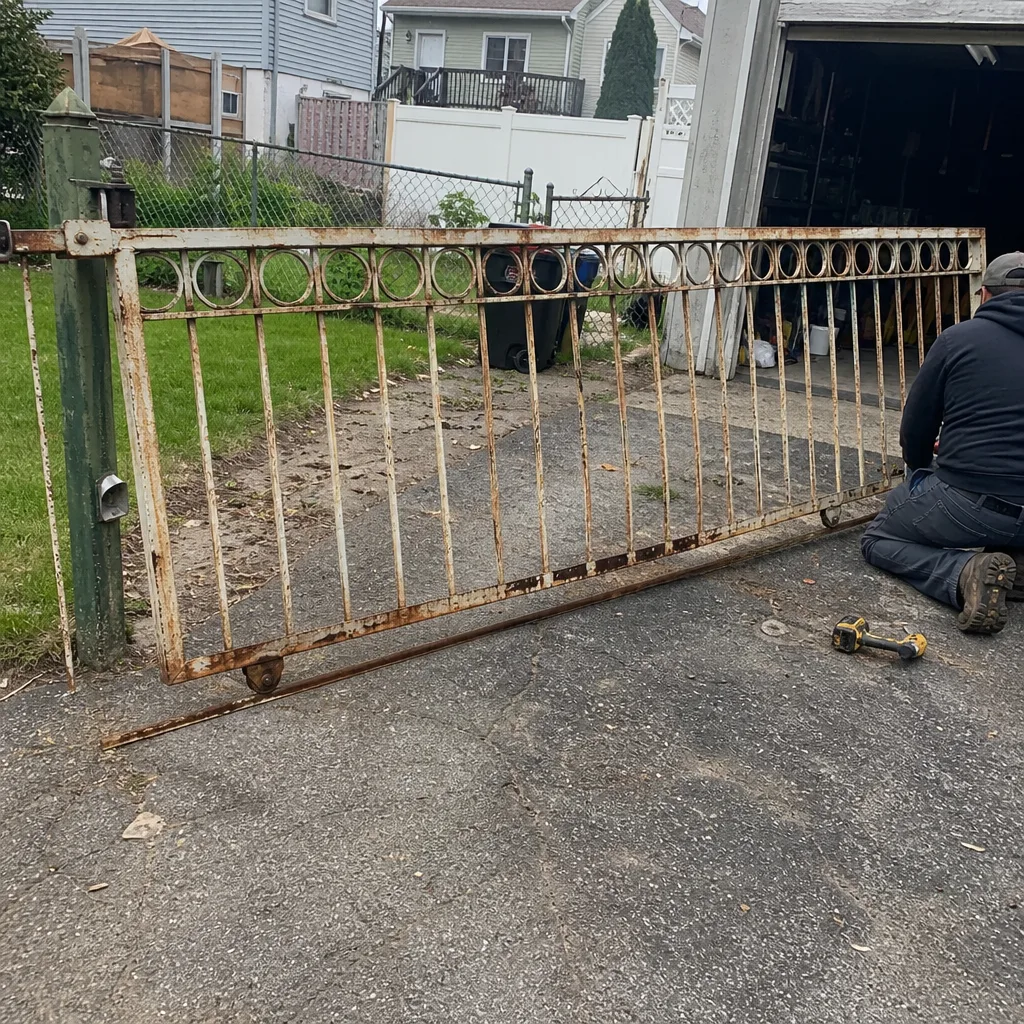 Before
 After
 Before
 After
When to Call a Professional
Some gate issues should never be handled by the property owner. Anything involving line voltage, the operator’s internal wiring, or the safety edge/photo-eye circuit needs a trained technician. A bypassed safety device on an automated gate is a serious hazard, and gate panels under load can cause crush injuries. If a slide gate has come off the track, don’t try to lift it back into place by hand. If a commercial gate has lost power while open, don’t attempt to manually force it closed. Beyond safety, call a professional when the gate binds, sags, stops mid-travel, refuses to close, or reverses unexpectedly. These symptoms usually trace back to a fault that needs a full three-layer diagnosis, not a quick check. Gate Repair Elizabeth offers free estimates in Elizabeth – call (844) 654-1710.
Frequently Asked Questions
There’s no flat rate because the cost depends on which layer failed and how much of the entryway surface needs correction. The estimate is free, and the written estimate you agree to before work starts sets the final price.
In many cases, yes, when the fault is in the control layer or a specific component we can address on the first visit. If parts must be ordered for a specific brand or model, we’ll schedule a return visit and quote the job before we leave. Call (844) 654-1710 for an exact quote – estimates are free.
We work on LiftMaster, FAAC, BFT, Linear, Viking, Ghost Controls, DoorKing, Elite, and Mighty Mule, across both residential and light commercial systems. Brand-specific familiarity is why our diagnosis is faster and our parts are correct the first time.
We repair both. Residential swing gates, residential slide gates, and commercial sliding gates share parts but not repair logic. On commercial systems we test the access-control hardware and the operator together, because the fault is often in the integration between them.
Usually because the underlying cause wasn’t fixed the first time. If new rollers went onto a shifted track, or a new motor went onto a failing control board, the same failure returns. A full three-layer diagnosis is what ends the repeat visits.
Yes. If cumulative damage across all three layers makes repair an ongoing expense, we’ll say so and quote both paths. We don’t upsell a replacement when a repair will hold. Call (844) 654-1710 – we’ll walk you through what’s actually failed before you decide.
The Bottom Line
A gate failure almost always involves three layers: the mechanical hardware, the electrical operator, and the control board. In Elizabeth, urban humidity, freeze-thaw cycles, and transit-corridor vibration turn small faults into compound failures, which is why surface-level repairs don’t last. If you take one thing from this guide, take the diagnostic order: check the mechanics and the entryway surface first, then the electrical, then the control layer. Brand-specific knowledge is what makes that order work in practice. And when a call reveals real damage or a safety concern, that’s when our team earns its keep. If your gate needs attention, call Gate Repair Elizabeth at (844) 654-1710 for a free estimate. We answer 24/7, with fast dispatch from 7am to 7pm, Sunday through Friday.
Written by the team at Gate Repair Elizabeth.