
Last updated November 15, 2026
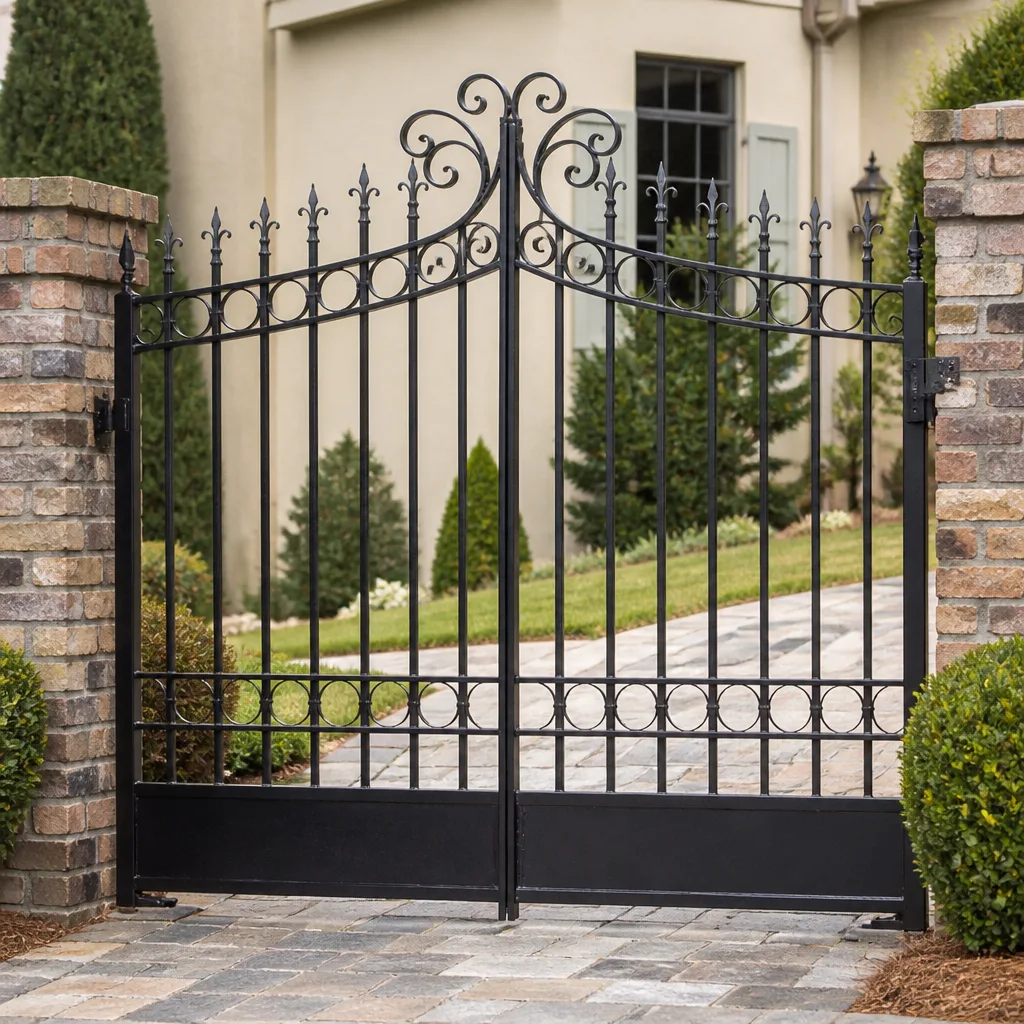 Wrought iron
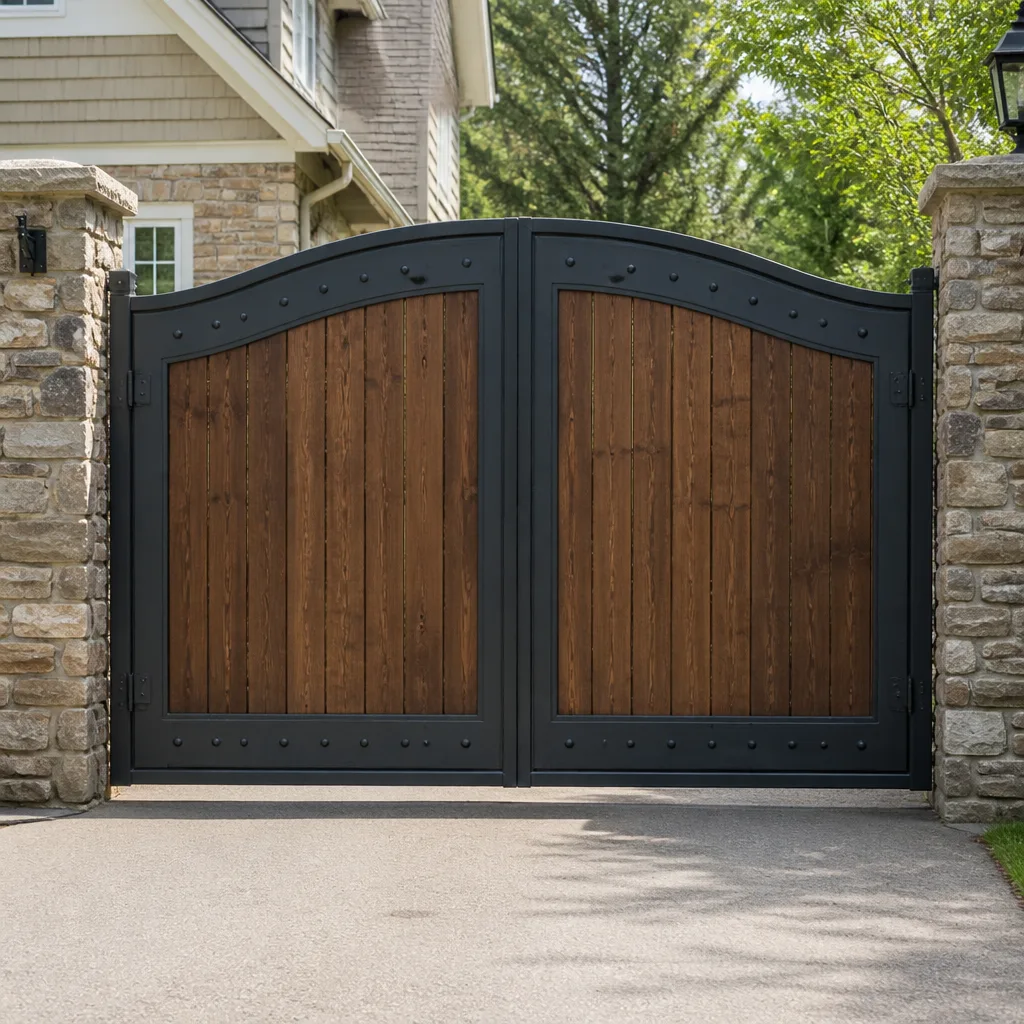 Wood & steel frame
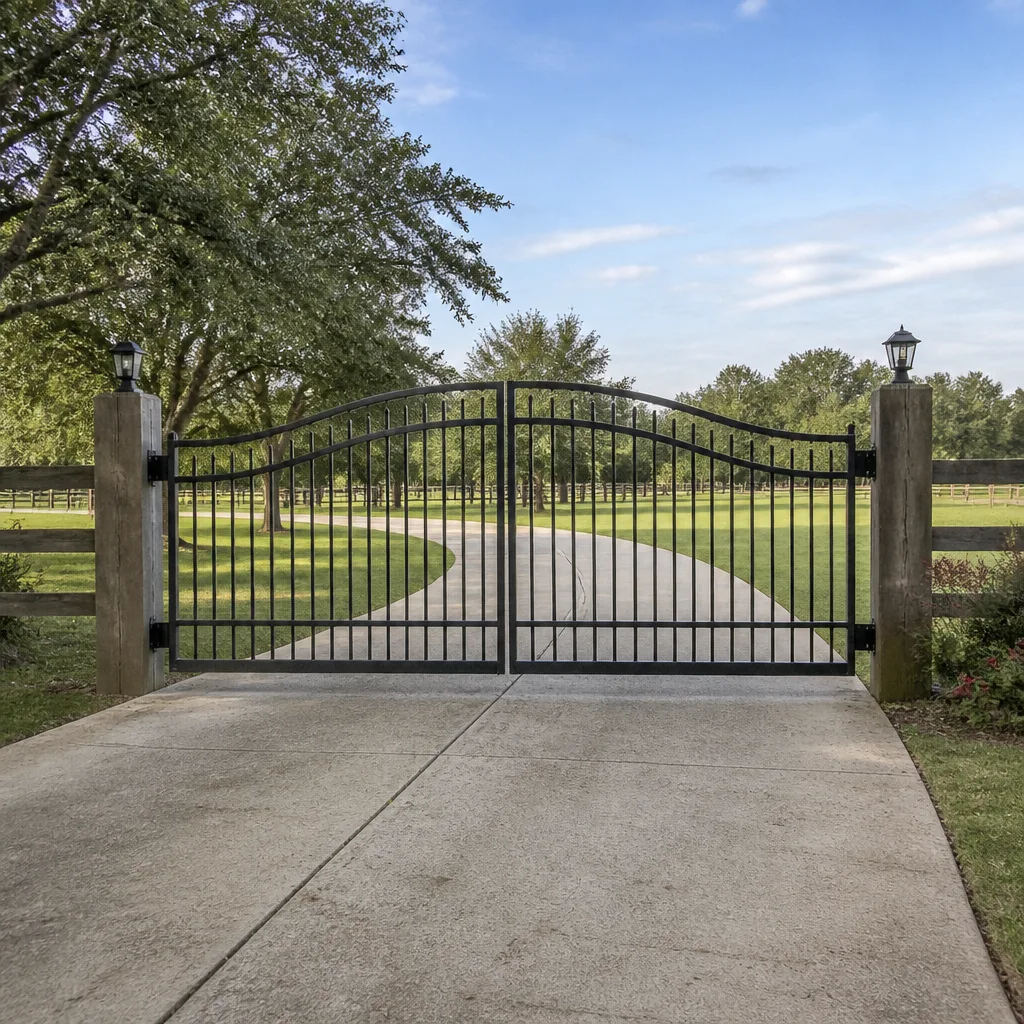 Farm & ranch
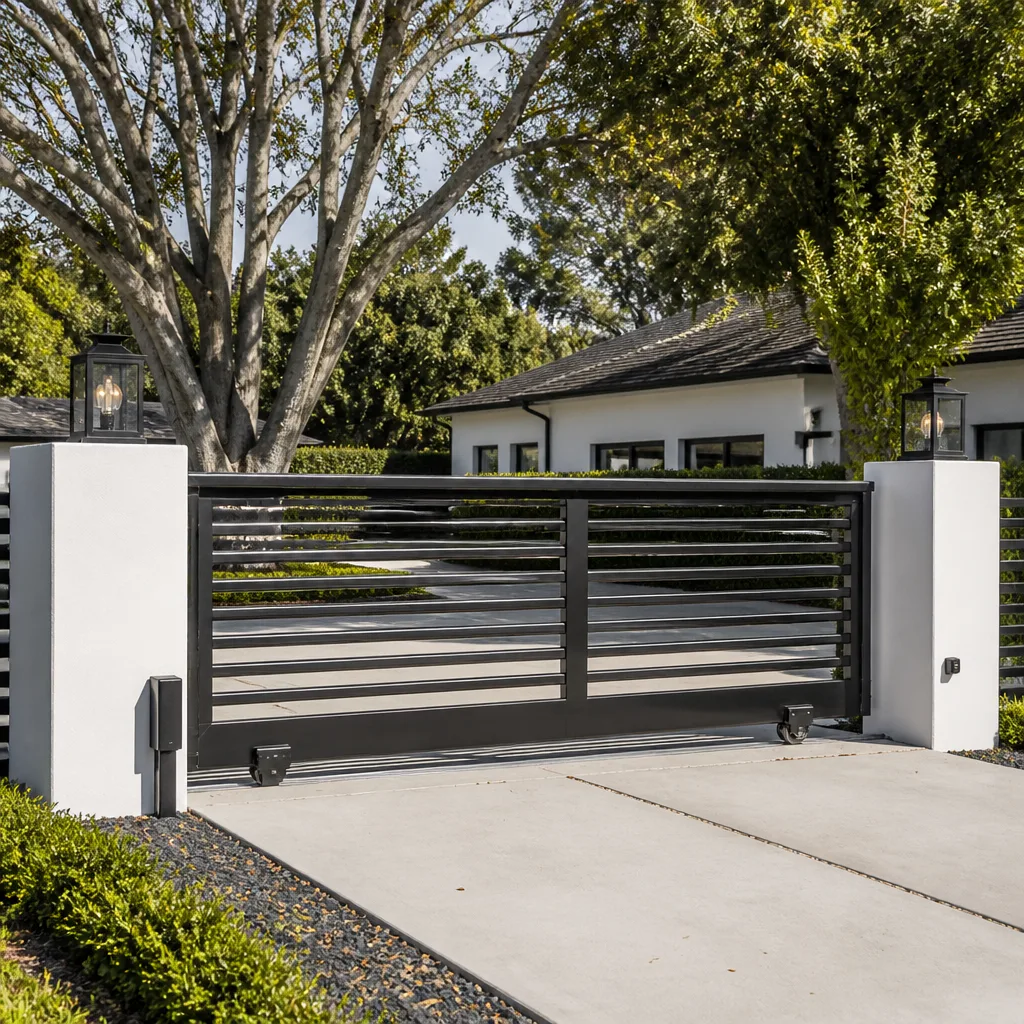 Sliding driveway gates
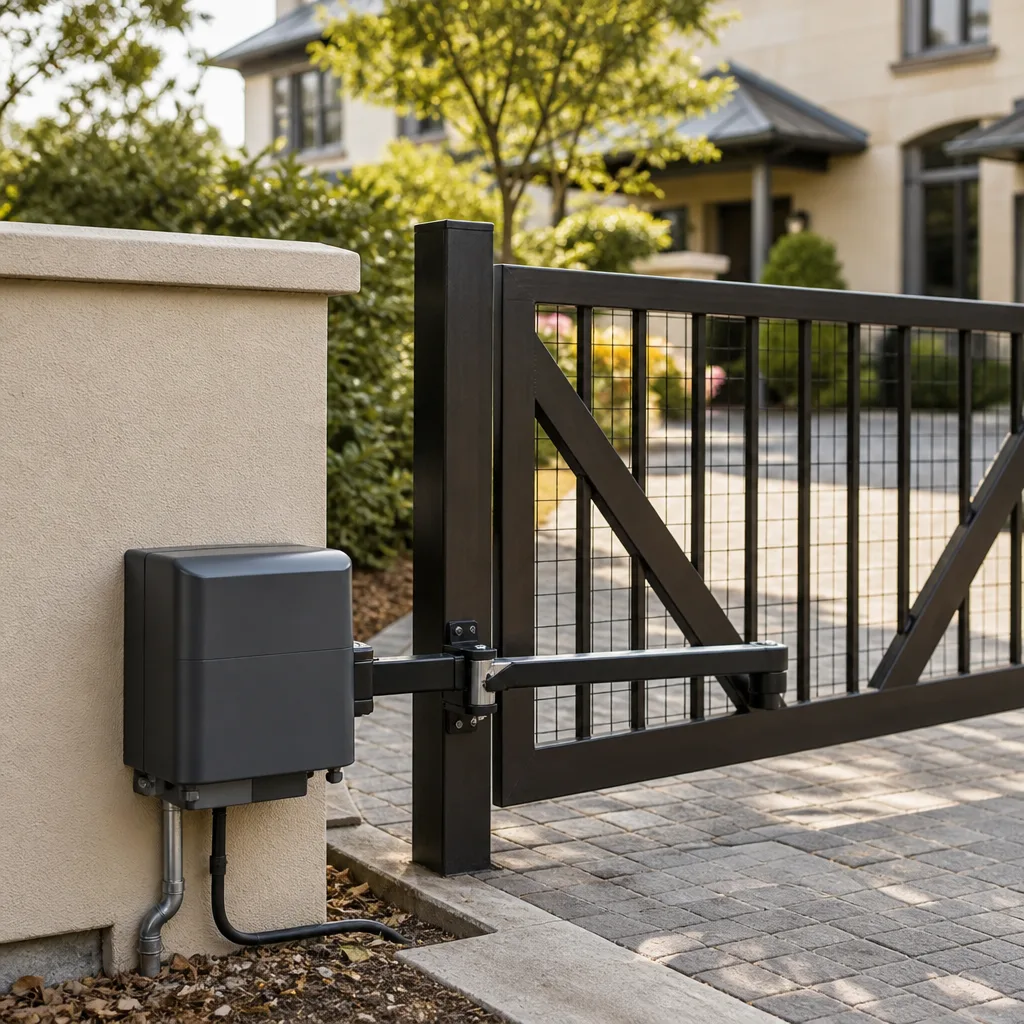 LiftMaster operators
Free on-site gate assessment - hinges, posts, and your LiftMaster or Nice gate operator checked before anything is quoted
The assessment is free and the quote is the invoice.
Get your free estimateSeasonal Gate Repair Care for Elizabeth: Year-Round Homeowner’s Guide
Most gate maintenance advice assumes four tidy seasons. Elizabeth doesn’t work that way. The hardware on an Elizabeth gate takes its worst beating in February and March, when repeated freeze-thaw cycles work hinge welds and shift concrete footings in ways mid-winter cold never does. By the time a gate starts dragging, the ground beneath the post has usually been moving for weeks. This guide reorganizes seasonal care around the damage windows that actually exist here, not the ones on a calendar. You’ll learn how to read your gate’s condition month by month, spot footing shift before it reaches the operator, and time the prep that genuinely protects hardware.
Quick Answer
In Elizabeth, gate hardware is stressed most by late-winter freeze-thaw cycles, early-spring ground heave that misaligns posts, and summer humidity combined with bay-adjacent air that accelerates corrosion on exposed steel and fasteners. The highest-value care windows are late February before the thaw, early spring before heave peaks, late summer before the wet season, and late fall before the first hard freeze. A gate inspected in each of those four windows gets fixed before small alignment and corrosion issues reach the operator, which is where repair costs climb fastest.
Styles & brands we work with
- Wrought iron
- Wood & steel frame
- Farm & ranch
- Sliding driveway gates
- LiftMaster operators
Table of Contents
- Why Elizabeth’s Climate Breaks the Four-Season Rule
- Ground Heave and Footing Shift: Spotting It Early
- Corrosion Pressure Near Newark Bay and the Arthur Kill
- The Five Highest-Risk Windows in an Elizabeth Gate Calendar
- Fall Prep That Actually Matters vs. Advice That Doesn’t
- What Seasonal Stress Does to Electric and Automated Gates
- A Month-by-Month Homeowner Walkthrough
- Reading Your Gate by Brand and System Type
Why Elizabeth’s Climate Breaks the Four-Season Rule
Elizabeth sits in a climate zone where winter rarely stays cold and summer rarely stays dry. That oscillation, not the raw temperatures, is what shortens the life of gate hardware. Water gets into a joint, a weld seam, or the gap around a post, then freezes and expands overnight. The next afternoon it thaws and drains. Repeat that forty or fifty times across February and March and structural details that were tight in December are loose by April.
The same pattern affects the ground. Elizabeth’s soils hold moisture, and when a wet fall is followed by a cold snap, the top layer of soil lifts as it freezes. A gate post set to proper footing depth is designed to resist this, but a post that’s been in the ground for years can still shift a fraction of an inch each cycle. That sounds small. At the latch end of a twelve-foot gate, a fraction of an inch at the post becomes a visible sag and a dragging swing.
Summer brings its own pressure. Humidity is high for months, and the low-lying areas near the waterways that border Elizabeth keep moisture in the air longer than inland neighborhoods do. Steel fasteners, hinge pins, and the exposed metal of an operator housing all sit in that humidity. Add summer heat and the expansion that comes with it, and you get the second major stress window of the year.
What this means for a homeowner is simple: stop thinking about spring cleaning and winterizing. Think about the transitions. The gate is most vulnerable in the weeks when the weather is changing, not in the middle of a stable season. That single shift in thinking is the core of seasonal care in Elizabeth.
Ground Heave and Footing Shift: Spotting It Early
Ground heave is the quiet problem. It rarely shows up as a dramatic crack or a fallen gate. It shows up as a gate that used to close flush and now needs a nudge, or an operator that used to run smoothly and now strains at the last few inches of travel. The cause is almost always a post or hinge footing that has moved, and the misalignment travels through the entire gate assembly until it reaches the motor.
Here’s how the sequence usually goes, in the present tense, on a typical Elizabeth property:
- Late-winter freeze-thaw cycles loosen the soil around the post footing.
- The post lifts or tilts slightly as the ground moves.
- The gate leaf swings out of plumb, so the latch no longer meets its strike cleanly.
- The hinge takes the extra load and begins to wear or loosen.
- On an automated gate, the operator compensates for the misalignment until it hits its force limit and stops, reverses, or throws a fault.
By step five, the homeowner is calling about a “motor problem” when the actual cause is a footing issue that started six weeks earlier. Our technicians have up to 14 years of experience, and this is one of the most common misdiagnoses we see on Elizabeth gates. The motor gets blamed, the motor gets replaced, and the gate still drags because the post never moved back.
What to check in early spring, before heave peaks:
- Does the gate leaf swing freely through its full arc with the operator disengaged? A gate that binds on manual swing has an alignment problem, not a motor problem.
- Does the latch meet its strike without you lifting or pushing the gate?
- Are the hinge plates sitting flat against the post, or has a gap opened at one edge?
- Is there a visible gap or crack in the soil or pavement around the base of the post?
- On a slide gate, does the gate track run level, or has one end settled?
Any yes to those questions is worth an on-site look before the spring weather settles. Catching footing shift in March is a repair. Catching it in July is often a repair plus an operator service. If you’re not sure what you’re looking at, gate repair starts with a proper diagnosis of the whole assembly, not just the part that’s complaining.
Corrosion Pressure Near Newark Bay and the Arthur Kill
Elizabeth’s position beside Newark Bay and the Arthur Kill means the air here carries more moisture and more airborne particulate than a typical inland New Jersey town does. That matters for gate hardware because corrosion is a moisture-and-time equation. The wetter the air sits on bare metal, the faster fasteners, hinge pins, weld seams and operator housings degrade.
The vulnerable spots on almost every gate are the same:
- Hinge pins and hinge plates – the moving metal wears through its coating first.
- Fasteners – screws and bolts on latch hardware, hinges and operator brackets.
- Weld seams – especially where two pieces of steel meet and water can pool.
- Operator housing and control box – the seams and cable entries are where moisture gets in.
- Ground-level contact points – the bottom rail of a swing gate or the track of a slide gate.
Corrosion mitigation is mostly about inspection cadence and cleanup, not exotic coatings. Wiping down exposed hardware after the wettest stretches, keeping the gate’s pivot points clean and lubricated, and touching up any bare metal before the next wet season all slow the process. The mistake homeowners make is waiting for visible rust. By the time rust is visible on a hinge pin, the pin is already wearing faster than it should.
Summer is the window to address this. Humidity is at its highest, so any flaw in a coating or a seam shows up fastest. A late-summer inspection that catches a failing hinge or a compromised weld is a small repair. Left through another winter, the same flaw becomes a structural issue.
The Five Highest-Risk Windows in an Elizabeth Gate Calendar
Forget January through December. Elizabeth gate care works better organized around five windows where the weather changes fast enough to stress hardware.
- Late February – pre-thaw inspection. The last hard freezes of the year. Check hinge welds, latch alignment and footing condition before the ground starts moving. This is the single most valuable inspection of the year.
- March to early April – ground heave peak. Watch for the early signs of post shift: dragging swing, latch misalignment, operator strain. Address anything that shows up here before it reaches the operator.
- June to August – humidity and corrosion window. High moisture and heat. Inspect hinge pins, fasteners and any bare metal. Clean and lubricate pivot points. Check operator housing seams for water intrusion.
- September to October – pre-freeze prep. The window where real prep happens. Tighten hardware, address corrosion, confirm drainage away from footings, and get the operator serviced before the first hard freeze.
- December – post-freeze check. After the first sustained cold, do a manual swing test and confirm the latch still meets cleanly. Any binding here points to a footing issue that started in the fall.
That’s the whole calendar. Five windows, each tied to a specific weather transition. A gate inspected in each one rarely surprises its owner. A gate inspected once a year, on a random weekend in spring, misses the fall prep that protects it through the worst of the following winter.
Fall Prep That Actually Matters vs. Advice That Doesn’t
Most fall gate advice is about aesthetics: clear the leaves, hose it down, maybe paint it. None of that meaningfully protects the hardware. The prep that matters in Elizabeth is about what the gate will face in February, which is freeze-thaw stress on wet, unmaintained components.
What actually protects a gate through the Elizabeth winter:
- Confirm drainage away from every footing. Water pooling at the base of a post is the single biggest driver of heave damage. If the ground around a post stays wet after rain, that’s where the winter damage will start.
- Tighten all accessible hardware. Loose hinge screws, latch bolts and operator bracket fasteners will work looser through freeze-thaw. Tight hardware has less room to move.
- Touch up bare metal before the wet season. Any spot where the coating has worn through should be addressed before months of moisture sit on it.
- Service the operator. Confirm the manual release works, the force settings are appropriate, and there’s no water intrusion in the housing. An operator on its last legs in October fails in March.
- Manual swing test with the operator disengaged. If there’s any binding, get it addressed in the fall, not in the spring when the ground is moving and the fix is bigger.
The advice that doesn’t help: painting over surface rust without addressing the underlying hinge wear, hosing down the gate and leaving water in the pivot points, and “winterizing” a gate that has no winter-specific vulnerability. Elizabeth gates don’t fail from cold alone. They fail when moisture, freeze-thaw, and moving ground meet unmaintained hardware. Fall prep should target that combination directly.
What Seasonal Stress Does to Electric and Automated Gates
An automated gate amplifies every mechanical problem upstream of it. The operator is designed to move a gate that’s aligned and freely swinging. When the gate is dragging because of a shifted post or a failing hinge, the operator fights that drag through every cycle. Over a winter, that friction wears the motor, the gears and the control board.
Seasonal electric gate issues in Elizabeth tend to cluster:
- Late winter: operator faults tied to a gate that binds in the cold. The gate itself is the problem, not the motor.
- Spring: alignment faults as footing shift throws the gate out of plumb and the operator’s limit settings no longer match the physical travel.
- Summer: moisture intrusion in the control box and housing seams after heavy humidity. Access-control keypads and intercoms near ground level take the worst of it.
- Fall: safety edge and photo-eye issues as debris and moisture build up on the sensors.
Brand matters here. Systems like Viking, Ghost Controls, DoorKing and Elite each have their own fault logic, their own limit-setting procedures, and their own parts profiles. An operator that throws a fault on a DoorKing access system is telling you something different than a Ghost Controls residential swing operator throwing the same code. Technicians who work on the specific brand diagnose by the system’s own logic rather than by trial and error. That’s the difference between fixing the actual cause on the first visit and swapping parts until the fault clears.
Seasonal care for an automated gate also means checking the safety devices every season. Photo-eyes, safety edges and any reversing logic on the operator should be tested through the full swing or slide cycle. These are the parts that protect people and vehicles, and they’re the parts that fail first when moisture and debris build up. We treat electric gate repair as a core specialty precisely because the electrical and mechanical sides of an automated gate can’t be diagnosed separately.
A Month-by-Month Homeowner Walkthrough
Here’s what an actual Elizabeth gate care year looks like when it’s mapped to damage windows rather than to seasons.
February – pre-thaw: Manual swing test with the operator disengaged. Confirm the latch meets cleanly. Look for soil gaps around post bases. Note anything that binds or scrapes.
March – heave watch: Repeat the swing test every couple of weeks. Any new drag, any latch that needs a nudge, any operator strain at the end of travel is a signal to get an on-site look before it worsens.
April to May – post-shift repair window: Address any alignment issues found in March. This is the window where a footing adjustment or hinge replacement is small. Later in the year, the same issue tends to reach the operator.
June to August – corrosion watch: Wipe down exposed hardware. Clean and lubricate pivot points. Check operator housing seams and control boxes for moisture. Test safety devices.
September to October – real prep: Tighten hardware, address any bare metal, confirm drainage away from footings, service the operator, and do a final manual swing test before the first freeze.
November to December – cold-weather check: After the first sustained freeze, do another swing test and confirm the latch still aligns. Any new binding points to a fall issue that didn’t get resolved.
January – quiet month: If all the prior windows were covered, January is usually a low-activity month. If the gate is showing problems now, they usually trace back to an unresolved fall or early-winter issue.
This is a homeowner’s inspection schedule, not a repair plan. If any step surfaces a real problem, that’s when you call a technician. A gate that fails a swing test in March is not going to fix itself by April. And when you’re ready to get a specific issue looked at, our team in Elizabeth handles diagnosis, parts, and repair as a single arc so nothing falls between trades.
Reading Your Gate by Brand and System Type
Seasonal care gets more effective when you know what you’re actually caring for. A residential swing operator and a light commercial access-control system have different parts that fail on different schedules.
On a residential automated gate running a Ghost Controls or Viking operator, the seasonal wear tends to hit the mechanical linkage, the limit settings, and the battery or power side. These systems are designed for homeowner-level reliability, and they reward regular seasonal checks with a long service life between repairs.
On a light commercial gate with a DoorKing access-control system, the seasonal stress sits in the entry devices, the control logic, and the sensor hardware. Keypads, intercoms and card readers near ground level take summer humidity harder than the operator itself does. A LiftMaster or Elite operator on a commercial gate has its own force and limit behavior that responds to mechanical alignment the same way a residential unit does, just with higher stakes.
Brand-specific care is not about brand loyalty. It’s about diagnosis. When a system throws a fault, the specific brand’s fault logic tells a trained technician what to look at first. That’s what reduces callbacks and repeat visits. Our team works across nine major gate brands – LiftMaster, FAAC, BFT, Linear, Viking, Ghost Controls, DoorKing, Elite and Mighty Mule – and we treat each one as its own system with its own failure patterns. If you want an expert look at what your gate is doing, Gate Repair Elizabeth is the gate-only specialist that handles diagnosis, parts and repair in a single visit.
Common Mistakes to Avoid
- Treating winter as the danger season. In Elizabeth, the danger is the transition out of winter. Freeze-thaw in February and March does more hardware damage than a stable January.
- Blaming the motor for a footing problem. A gate that drags, strains or trips a fault is usually misaligned, not electrically broken. Replacing the operator without addressing the alignment wastes the repair.
- Doing fall prep in the fall only. The fall so-called winterizing that actually matters is drainage and hardware tightening, done in September and October before the ground starts to freeze. Painting the gate in November protects nothing.
- Ignoring corrosion on fasteners. A rusty hinge pin is not a cosmetic issue in a bay-adjacent town like Elizabeth. It’s a wear point that will fan out into the hinge and hinge plate.
- Skipping the manual swing test. If you only ever test the gate by running it with the operator, you’re testing the motor, not the gate. Disengage the operator and swing it by hand at each seasonal window.
- Assuming all brands diagnose the same. A fault on a DoorKing access system and a fault on a Ghost Controls residential operator are not the same conversation. Brand-specific diagnosis saves a return visit.
- Waiting for visible failure. Seasonal care works because it catches small shifts and thin spots before they reach the parts that cost the most. Waiting for a gate to stop moving means you’re paying to fix the operator, not the footing.
See the difference
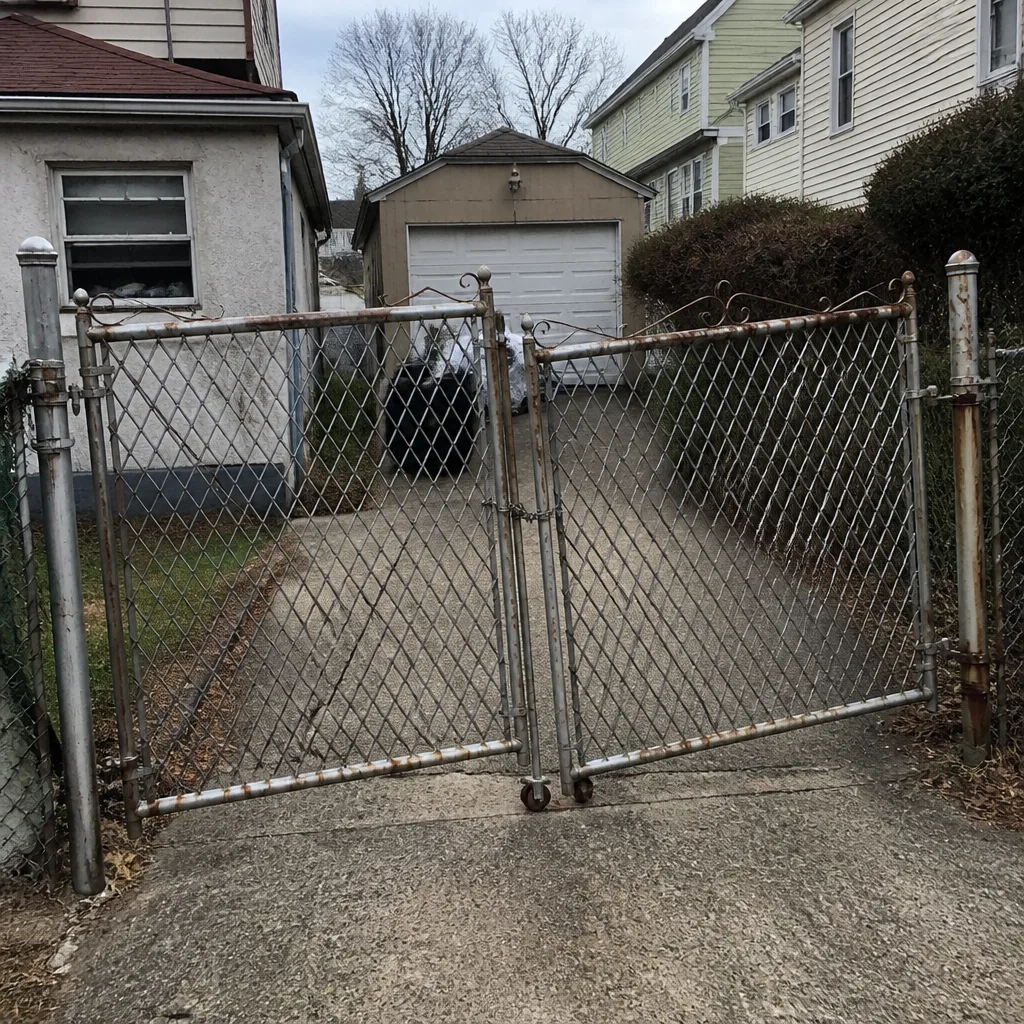 Before
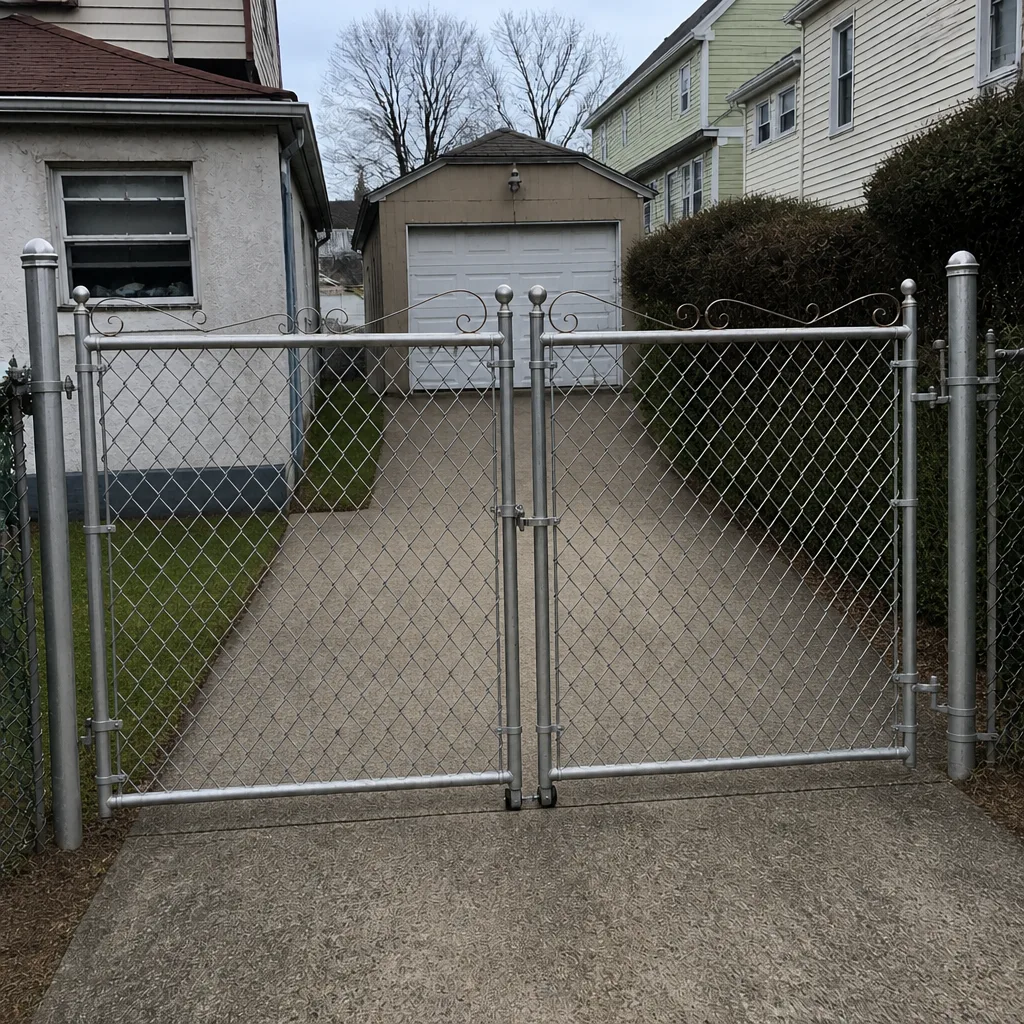 After
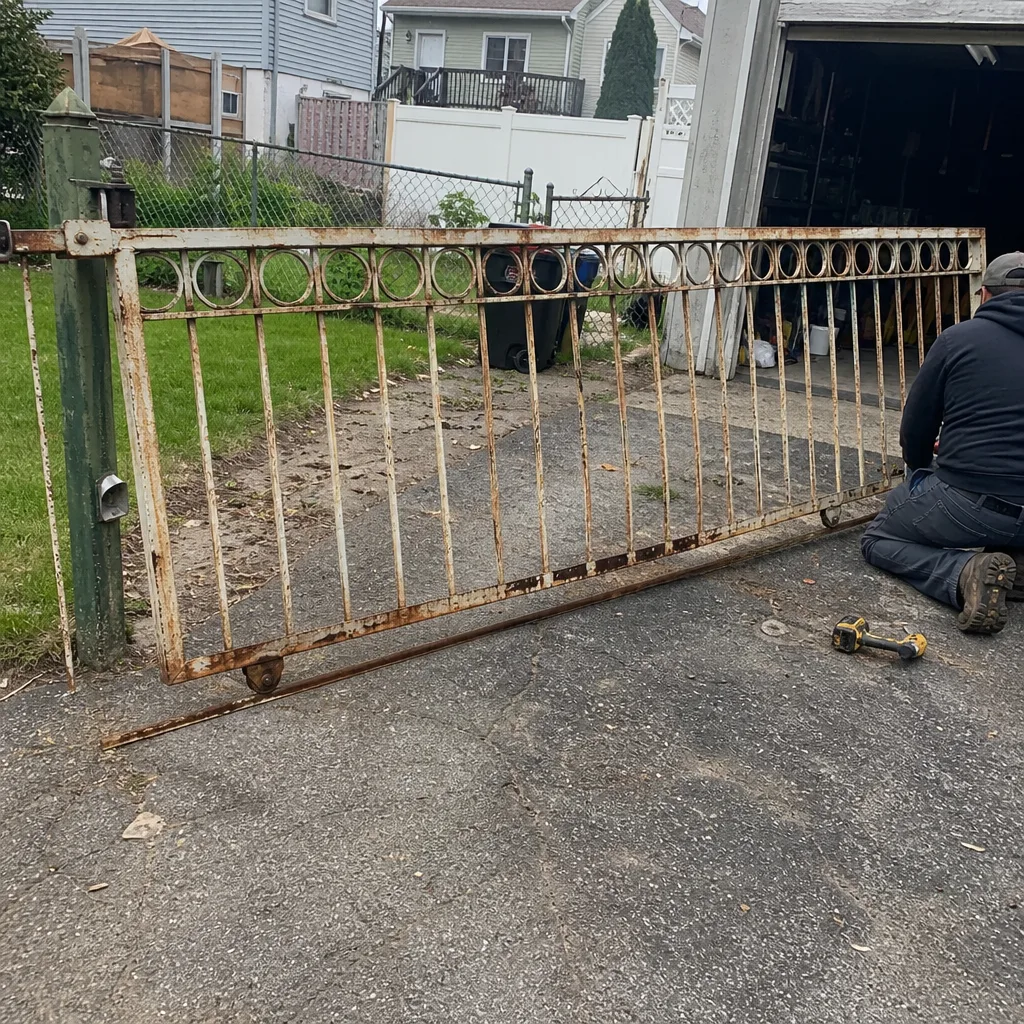 Before
 After
 Before
 After
When to Call a Professional
Call a technician when a manual swing test with the operator disengaged shows binding, when the latch needs a nudge to meet its strike, when the operator trips a fault through a normal cycle, when you see a soil gap around a post base, or when exposed hardware shows surface rust that’s progressed beyond a small touch-up spot. Call immediately if a gate has come off its track, if a hinge plate has pulled loose from the post, or if a safety device on an automated gate fails its test.
Gate Repair Elizabeth offers free estimates in Elizabeth. We work only on gates – gate repair, electric gate repair and installation – so every job is diagnosed by a specialist, not a generalist. Our technicians have up to 14 years of experience across nine major gate brands. Call (844) 654-1710 for a free estimate. We answer 24/7. Fast dispatch from 7am to 7pm, Sunday through Friday. If you’re calling outside dispatch hours, we’ll book you into the next opening.
For anything involving a motorized gate’s wiring, power feed, or the operator’s internal electrical components, do not attempt the work yourself. Line voltage and stored energy in an operator can cause serious injury, and a misadjusted safety device can fail exactly when it’s needed. Handling electrical and mechanical gate components requires a trained professional, and a gate that drags or misaligns is a call-to-us issue, not a weekend project.
Frequently Asked Questions
Late February through March is the highest-risk window for gate hardware in Elizabeth. Repeated freeze-thaw cycles stress hinge welds and shift concrete footings in ways mid-winter cold doesn’t, and the resulting misalignment tends to show up as a dragging gate or an operator fault by early April.
Disengage the operator and swing the gate by hand. If it binds, drags, or the latch doesn’t meet cleanly, the problem is alignment or footing, not the motor. A gate that swings freely by hand but still trips an operator fault is more likely an electrical or limit-setting issue. Call (844) 654-1710 for an exact diagnosis and a free estimate.
Yes. The air near Newark Bay and the Arthur Kill holds more moisture through the summer, and that accelerates corrosion on hinge pins, fasteners and weld seams. Late summer is the right window to inspect exposed hardware and address any coating failures before the wet fall.
Fall prep should include tightening all accessible hardware, confirming drainage away from every post footing, addressing any bare metal, servicing the operator, and doing a manual swing test with the operator disengaged. Painting and rinsing the gate surface don’t protect hardware from winter freeze-thaw stress.
Yes. A DoorKing access system tends to fail at the entry devices and control logic before the operator does, while a Ghost Controls or Viking residential operator mostly shows seasonal wear in the mechanical linkage and limit settings. Diagnosing by the specific brand is what keeps repairs to a single visit. Call (844) 654-1710 to have your system looked at by a specialist who works on it by name.
You can do the inspection steps: manual swing tests, visual checks for footing gaps, cleaning and lubricating pivot points, and confirming drainage. Any repair that involves the operator’s electrical components, safety devices, or structural alignment should be done by a trained professional. For anything beyond visual inspection and lubrication, call (844) 654-1710 – estimates are free.
The Bottom Line
Elizabeth gate care is really a calendar of weather transitions, not of seasons. The five windows that matter most are the February pre-thaw check, the March heave watch, the summer corrosion window, the September-October real prep, and the December post-freeze check. Footing shift caught in early spring is a small repair. Caught in mid-summer, it’s a repair plus an operator service. Brand-specific diagnosis on whatever system you own – whether it’s a DoorKing access system, a Ghost Controls or Viking residential operator, a LiftMaster, Elite or Mighty Mule unit – saves return visits and wasted parts. The homeowner’s job is the inspection cadence. The technician’s job is everything beyond a visual check and a lubricated hinge.
If your gate is showing any of the signs in this guide, or if you simply want a baseline seasonal check before the next window opens, call Gate Repair Elizabeth at (844) 654-1710 for a free estimate. We answer 24/7. Fast dispatch from 7am to 7pm, Sunday through Friday, with any call outside those hours booked into the next opening.
Written by the team at Gate Repair Elizabeth.